Ground squirrels have a few habits that set them apart from their tree-dwelling relatives, including the various sounds they make. You may even think there's a bird chirping nearby, only to spot a ground squirrel in the area and realize that the "bird" chirping noise is actually a squirrel sound.
Video of the Day
A High-Pitched Squirrel Sound
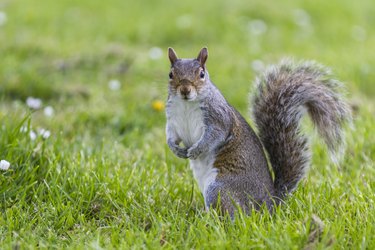
Tree squirrels and grounds squirrels alike make noises when they sense a predator or potential source of danger in the area. Several varieties of ground squirrels, such as the California ground squirrel, make a high-pitched sound when sensing a threat nearby. The ground squirrel often stands upright on its hind legs and emits a single whistle, chip or chirp sound, which could be mistaken for the chirp of a small bird such as a warbler or goldfinch. The squirrel pauses a few seconds, then emits another chirp or, repeatedly chirps until the perceived danger passes.
Video of the Day
In some situations, the ground squirrel sound is even higher in pitch. For this type of alarm call, the squirrel makes a series of quick, high-pitched, trilling whistles or chirp sounds, much like the alarm sounds made by a chipmunk. When making this type of noise, the squirrel is usually on all fours low to the ground, possibly in fear of a predator overhead, such as a hawk.
Organizations such as Animal Behavior and Cognition note that some squirrels have separate alarm calls and behaviors when spotting ground- or air-based threats. For ground-based threats, the ground squirrel stands upright like a prairie dog to keep an eye on the predator, but stays low for air-based predators. The group Frontiers in Ecology and Evolution notes that Richardson's ground squirrels, for instance, use short chirps for avian threats and longer, whistle-type sounds for ground-based threats.
Sounds Vary By Species, Size
Much like birds, the exact types of sounds emitted by ground squirrels and their relatives vary from one to the next. Large varieties of tree squirrels tend to make a clucking or barking type of sound, while smaller tree and ground squirrel noises sound more like chirps, as do many calls made by chipmunks.
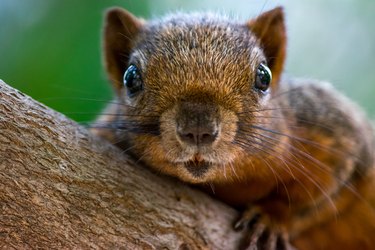
The easiest way to familiarize yourself with ground squirrel sounds is to take a look around when you hear high-pitched noises that sound a bit like chirps. If you know your area has ground squirrels and you happen to see one nearby when you hear an odd chirp-like noise, there's a good chance the noise you heard came from a ground squirrel. The sound may even be similar to that of a squeak toy. If you hear this sound while walking in a field, it could be a ground squirrel. Spend some time observing ground squirrels and before long, you'll hear them vocalizing.
Smaller tree squirrels such as the red squirrel also make high-pitched, chirping-type sounds, but these sound different than the ground-dwelling squirrel sounds. Red squirrel noises sound much like higher-pitched versions of the sounds larger tree squirrels make, with the smaller creatures being quite chatty, as they seem easily disturbed. Baby squirrels of all varieties also make calls when they're hungry or when they feel distressed, but the calls are so quiet that people aren't likely to hear them unless the baby squirrel is a foot or so away.