Things You'll Need
Mild powdered laundry detergent
Vinegar
Salt
Lemon juice
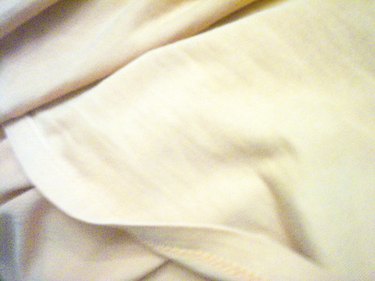
Your linens such as tablecloths, sheets and towels can become discolored over time. Linens yellow from a number of things including stains, oxidation and improper cleaning. Linens that have yellowed can be cleaned, but you must do so with caution because they can become damaged in the process. Ideally, you want to clean yellowed linens by hand.
Step 1
Fill your sink or a large basin with cool water. Submerge your linens in the warm water and allow them to soak for 10 to 15 minutes.
Video of the Day
Step 2
Add 2 cups of white vinegar, 1 cup of salt and 1 cup of lemon juice for every gallon of water you used. Stir the items with your hands. Allow the linens to soak in this mixture for 2 to 3 days. This will help soak out some of the stains.
Step 3
Drain the water. Rinse the items under cool water to remove vinegar, salt and lemon juice.
Step 4
Refill the basin or sink with hot water. Add one cup of a mild detergent for every gallon of hot water you use.
Step 5
Stir the items in the hot water. Leave linens to soak for at least 2 days, stirring occasionally. Check after two days and leave to soak if the linens are still yellow. Check everyday for up to a week and remove when linens are no longer yellowed.
Step 6
Rinse the linens under a stream of cool water until they are free of soap.
Step 7
Place linens on a bath towel. Wrap the linen in the towel to absorb excess water. Do not wring them out. Hang them to air dry.
Step 8
Remove linens from drying line or rack when they are slightly damp and iron them on high heat.
Video of the Day