
Lead content in toys is a serious concern for parents, children and health care providers alike. There is no safe level of lead exposure and toxic effects from lead in toys and from other sources are cumulative. The liver and kidneys are unable to remove lead from the body, and it ends up being stored in bones and organs, causing neurological damage over time. Children are especially vulnerable, since they are prone to chew on their toys--helping lead enter the body quickly through the bloodstream. A child's low body weight causes even a slight lead exposure to have greater impact. Acute lead poisoning can cause lethargy, ataxia, seizures and coma, but the vast majority of cases have no overt symptoms. The best protection against lead exposure from toys is knowing the types of toys that typically contain it.
Step 1

Stay on the safe side by having your child screened by a physician for lead exposure with a simple blood test that will detect the smallest level of lead, starting at age 1 and continuing through age 6. If no lead is present in the test, chances are the toys your child plays with are safe, and so is your household environment.
Video of the Day
Step 2
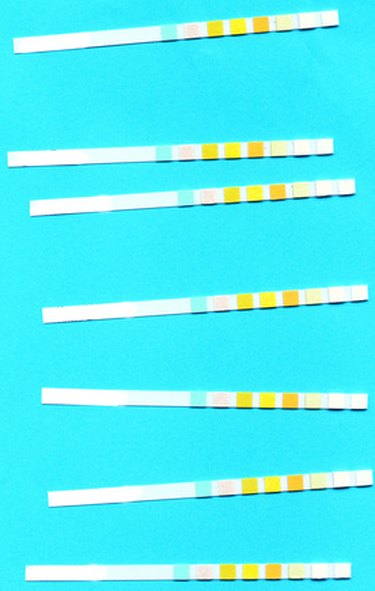
Sidestep those commercial lead testing kits. The Centers for Disease Control in Atlanta have tested most of them and have shown them to be unreliable.
Step 3

Check the manufacturer's name when buying dolls or action figures for children. Even if the toy is made in America, it may have accessories that are manufactured in China, where the largest number of toys containing high amounts of lead have been identified. Check the manufacturer's name through a consumer reporting agency or on the internet, to see if the their products have had recalls for high lead content.
Step 4
Avoid buying children's toys from vending machines. The cheap jewelry and figurines in these machines are often decorated with lead paint. Test children's jewelry by rubbing it hard on a piece of paper. If it leaves a dull, grey mark on the paper, it contains lead. Do not buy toys that have tiny, removable parts that can be swallowed whole. Not only are they a choking hazard, but they can deliver a toxic exposure if the part contains lead.
Step 5
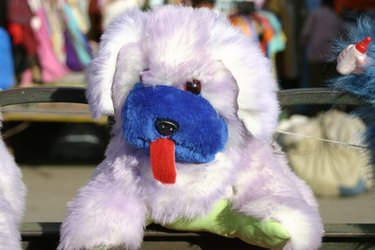
Choose stuffed animals with care. Check that the manufacturer has not had product recalls, since even reputable, big-box retailers have had to pull stuffed animals that contain high levels of lead from their shelves.
Step 6
Use your senses. Test the weight of a toy in your hand. If it seems too heavy for its size, chances are good it contains lead. Look at the toy. If it has a dark grey, metallic shade or is painted bright orange or red, put it back. If the toy is made of soft, malleable plastic, don't buy it. Lead is used as a stabilizer to keep plastics pliable.
Step 7
Supervise children when allowing them to play with a grandparent's toys, especially if they are solid metal, or painted. This includes army figures, train sets, anything more than 40 years old.
Tip
Teach your child not to chew on any toy--even a stuffed animal.
Warning
If you live in a house that was built before 1978, watch carefully for peeling and chipping paint. This is a continuing source of high levels of lead, especially when ingested by children.
Video of the Day
- Centers for Disease Control and Prevention: Lead
- Colorado Department of Public Health and Environment: Keeping Kids Safe from Toys Contaminated with Lead
- New York State Department of Health: Lead in Children's Toys: Questions and Answers for Health Care Providers
- US Recall News: List of Recalled Toys for Lead Poisoning Hazards
- MedLine Plus: Lead Poisoning
- New York State Department of Health: What Home Owners Need to Know About Removing Lead-Based Paint