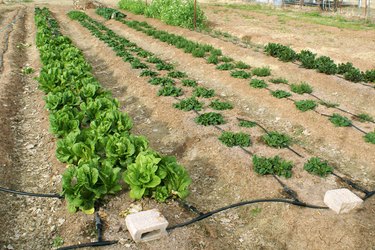
Whether you plan to plant a small vegetable patch or a sprawling garden, planning out the rows is a key first step in the process. Growing your veggies in neat rows helps keep the garden organized and makes it easier to care for your plants.
Plan the Rows
Video of the Day
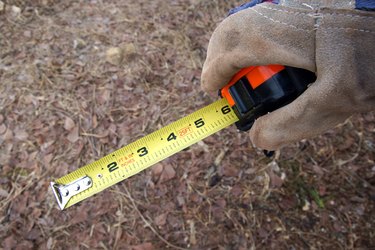
Before you start marking and digging rows, plan the layout and spacing to maximize your garden area. Measure the overall garden area so you can divide the space into rows. The size and spacing of the rows depends heavily on what you plant. Small vegetables, such as carrots (Daucus carota), grow in narrow rows and only need around 12 to 18 inches between rows. Larger vegetable plants, such as corn (Zea mays), take up more space and need 24 to 48 inches between rows. If you plan to use a rototiller to control weeds, your row spacing needs to be at least as wide as the machine.
Video of the Day
Prep the Ground
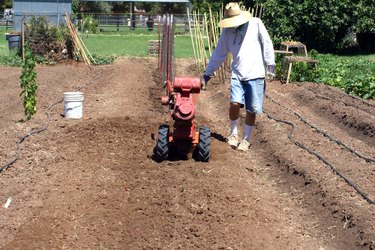
A successful vegetable garden starts with healthy soil that drains well and provides nutrients to the growing plants. Prep the vegetable garden soil before you mark or dig rows to get a level, consistent growing space. Use a rototiller to loosen the soil. Add 2 inches of compost over the entire vegetable garden. Work the compost into the soil using the rototiller. Level the garden with a rake so you don't have any ruts or uneven areas.
Mark Your Territory
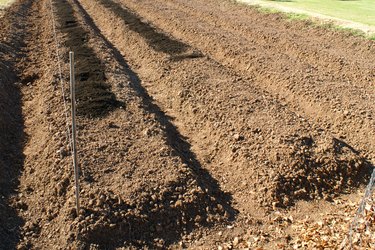
Planting straight rows is easier with a guide. Starting at one edge of the garden, press a stake into the ground at the end of each row. Tie string between the stakes to mark the entire length of the row. Measure over from the first row to find the location of the second row. Refer to your garden plans to find the spacing measurements. Continue measuring and marking each row across the width of the garden.
Plant the Vegetables
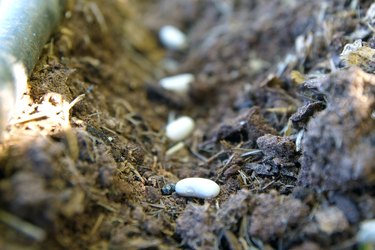
When planting with seeds, you can create a furrow along the length of the string in each row. The corner of a hoe blade works well to create the furrow. The depth depends on the type of vegetable you're planting. Most guidelines suggest a depth of four times the seed's diameter. If you use seedlings, dig a hole for each seedling along the string. Whether you plant from seeds or seedlings, use spacing guidelines for each specific vegetable. Tomatoes (Solanum lycopersicum) need 18 to 36 inches between plants, for example, while spinach (Spinacia oleracea) needs only 2 to 4 inches.