eHow launches Android app: Get the best of eHow on the go.

How To

How to Draw Storyboards

Contributor
By eHow Contributing Writer
(3 Ratings)

Storyboards are visual maps of the story you will be telling with a comic book, video or movie. Each frame should advance the story, using a sketch of the basic action and only a few words. Storyboards for comics are usually very detailed.

Difficulty: Easy
Instructions

Things You'll Need:

  • Ruler
  • Pencil
  • Paper

    Develop Your Story

  1. Step 1

    Begin by asking yourself whom the story is about, what will happen to your characters, how and when the action will unfold and why the story is being told.

  2. Step 2

    Select the main characters for your story. You should have a protagonist (the hero) and an antagonist (the villain).

  3. Step 3

    Write a brief script. Before you can draw out the action, you will need to know what each character will say. This is especially important for storyboarding comics because you need to leave room in each frame for dialogue bubbles.

  4. Create Model Sheets for Major Characters

  5. Step 1

    Use action figures or other 3-D models to get ideas for character design.

  6. Step 2

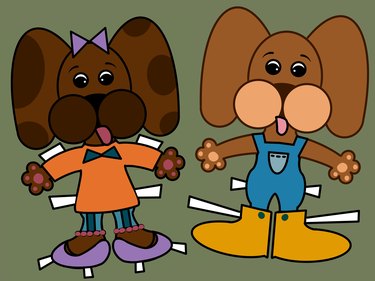
    Draw a full-length picture of your protagonist. On the same page, sketch out the character from various angles. Include a few different facial expressions as well.

  7. Step 3

    Make a model sheet for each major character. Once you begin to draw your comic, you can refer back to your model sheets to keep the character consistent throughout.

  8. Draw Your Storyboards

  9. Step 1

    Draw a frame on your first piece of paper. The frame size and shape can vary, depending on how much action must take place in the frame.

  10. Step 2

    Determine the positions the characters in the frame will take. Remember to leave room in the frame for the dialogue that accompanies the action.

  11. Step 3

    Write a brief description of the plot point you are illustrating in the scene. These notes will help you keep your place in the narrative as you move forward.

  12. Step 4

    Keep your drawings simple at this stage. Storyboards are only a mid-process guide to help you as you develop your story. The final version of your comic will be drawn separately.

  13. Step 5

    Create one frame for each segment of action or plot point in your script.

  14. Step 6

    Review the entire storyboard of frames once you finish. Ask yourself whether this storyboard would explain your story to someone else.

Tips & Warnings
  • Storyboards are time-lines, so draw your storyboards in chronological order.
  • If you are storyboarding a movie or video, try tacking each frame onto a corkboard, making it easy to rearrange the frames as needed.

Comments  

hum3ngl said

Flag This Comment

on 6/18/2009 I love your idea about model sheets! I use StoryBoard Quick, which allows me to color-customize my characters and save them in the program, and after doing so I took your advice and wrote up everything I had planned about their personalities, reactions, and behavioral habits. It was such a resource! Thanks :)
I wonder if you've ever used StoryBoard Quick for your storyboarding projects? www.storyboardquick.com
It helps so much for those of us who are not artistically inclined :)

Subscribe

Post a Comment

Post a Comment

eHow Article: How to Draw Storyboards

Related Ads

  • Have you done this? Click here to let us know.
I Did This
Get Free Arts & Entertainment Newsletters

Copyright © 1999-2009 eHow, Inc. Use of this web site constitutes acceptance of the eHow Terms of Use and Privacy Policy.   en-US Portions of this page are modifications based on work created and shared by Google and used according to terms described in the Creative Commons 3.0 Attribution License.

Demand Media
eHow_eHow Arts and Entertainment