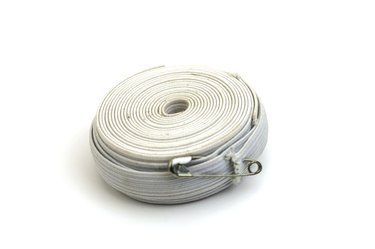
Snug elastic cuffs and waistbands stretch or shrink with wear, making them the ultimate in comfy wear. If it's measured correctly, an elastic edge helps clothing fit your body without feeling uncomfortably tight. You can find as many types of elastic as garments that use them.
Types of Sewing Elastic
Video of the Day
Before cutting that elastic band for sewing, crafters must find the right type of elastic to use on their projects. Many kinds of material and types are available:
Video of the Day
- Soft stretch baby: Rubber and acetate, available in 1/8 inch and 1/4 inch
- Polyester: Knit, braided, non-roll, pajama and underwear polyester, polyester and rubber, varies from 1/8 inch up to 1 inch
- Heavy stretch: Polyester and rubber, stiffer than other types and used in exposed waistbands, 1 inch only
- Cotton braided: Cotton and rubber, available in 3/8 inch and shrink-resistant
For the Waist
A correct fit of elastic for the waist means obtaining a good measurement of the natural waist or wherever the finished garment is to sit on the torso. Between 2 to 4 inches are deducted from this measurement to make up the elastic length. If a tighter fit is preferred, deduct 4 inches or more from the measurement. Roll the elastic out flat and cut at that measurement without stretching it. Before you insert it into the garment waistband, wrap the elastic around your waist to test how it feels.
Measuring for the Cuffs
When measuring cuffs for sewing elastic, just wrap the elastic around the wrist or ankle and pull it until you achieve the desired tightness. With a pen, mark the point where the two sides of the elastic. A second set of lines marked about 5/8 inch past this point indicates the seam allowance. Leave an additional 2 inches of excess on either side as elastic tails to hold onto when you're sewing the elastic together inside the fabric cuff. Cut off the tails when you're finished.
Sewing Elastic Widths
Sewing elastic comes in many widths, from as small as 1/8 inch up to 1 inch or larger. Choose the right width of elastic to use on different sections of your project. For instance, a narrow 1/8-inch elastic waistband increases the sensation of tightness by not disbursing pressure properly. A 1-inch elastic, or maybe 1/2-inch for children, makes a better fit for waistbands. Narrow elastic serves as a better choice for cuffs, since the cuffs don't have to hold up an entire garment.