Things You'll Need
Fine-grit sandpaper
Water
Lint-free cloth
Large paintbrush
Tan paint
Small paintbrush
Brown paint
Paper towels
Newspaper or drop cloth
Face mask
Clear acrylic spray paint
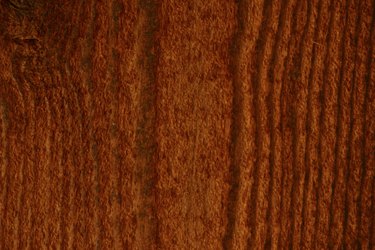
Use paint or underglaze to make ceramic look like wood. This can be done on a glazed ceramic figurine, pot or other item or it can be applied to bisque, which is fired but unglazed ceramic. The key to making the wood grain look realistic is to use watery paint for the wood graining, as real wood grain rarely has hard edges. The edges are usually soft, and this can be replicated by using paint or underglaze that's thinned to the consistency of watercolor paint.
Step 1
Sand the glazed ceramic item using a fine-grit sandpaper. Sand all areas that will be painted to look like wood. Sanding will scuff up the slick surface so the paint can adhere. Sanding is not necessary if you're working with bisque, which is fired but unglazed ceramic.
Video of the Day
Step 2
Rinse the ceramic item to remove dust and debris. Dry it with a lint-free cloth.
Step 3
Apply two coats of light tan acrylic paint as a base for the wood grain effect. Use a large paintbrush to get an even, uniform coat. Allow the paint to dry before applying a new coat of paint.
Step 4
Dilute a darker tan or light brown acrylic paint with water until it is similar to watercolor paint. Mix thoroughly with the handle of the paint brush and wipe the brush with a paper towel when mixing is complete.
Step 5
Paint the wood grain onto the ceramic object using a small paintbrush and the watery darker brown paint. Use some real wood as a reference. Paint parallel lines that extend the length of the wood. Opt for wavy lines or straight lines. Add a few circles if the wood grain includes knots. Allow the paint to dry thoroughly.
Step 6
Place the ceramic item atop a section of newspaper or a drop cloth.
Step 7
Don a face mask.
Step 8
Coat the ceramic with one or two coats of clear acrylic spray paint. Allow the paint to dry before applying a new coat. This will seal the paint and it will provide a uniform finish. Allow the paint to dry thoroughly before handling. Consult the product packaging for the recommended drying time of the sealer.
Tip
If you're a potter, paint on the wood texture onto bisque pottery using underglaze. Coat the entire item with a solid light tan background color. Allow it to dry. Then, add water to a darker brown underglaze so it has a watercolor-consistency and paint on the wood grain. Once it's dry, add one or two coats of clear glaze and fire to the appropriate cone, as indicated on the product packaging for the glaze.
To prevent fading, use a UV-resistant clear coat if the ceramic item will be placed outdoors.
Warning
Never mix acrylic paint with more than 50 percent water. The paint will lose its adhesive properties, resulting in peeling and chipping. Always wear a face mask when working with spray paint. Use spray paint in a well-ventilated location.
Video of the Day