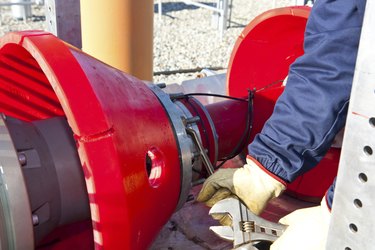
Cities, counties and states use a mandrel to inspect the inside of underground pines and sewer conduits, generally after new construction or during maintenance. Independent pipeline inspection companies complete the tests.
Traditional Mandrels
Video of the Day
Mandrels used for pipeline inspections consist of metal rods with fingers or arms around their core. They usually are made of steel or aluminum. The tool stops when it encounters any impediment.
Video of the Day
Use and Process
Also known as "pigging," mandrel inspections test flexible pipes for deflection, or out-of-roundness. Testing shows whether the pipe has bent under pressure from being buried in soil. The process also identifies any blockages in the pipe. Depending on design requirements, pipes that are property installed should deflect less than 5 percent or 7 1/2 percent after 30 days. Inspectors push or pull the mandrel through the pipe to find problems.
Newer Technology
Some companies have switched to laser or video inspections instead of metal mandrel tests. Laser mandrels can identify all the problems in a pipe at once. With standard mandrels, each problem found must be fixed before the mandrel inspection can continue.