What Is Polyurethane Sealant?

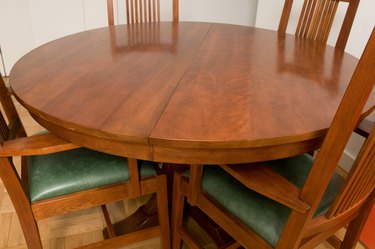
Used on wood, masonry, concrete and steel, polyurethane sealant waterproofs joints and surfaces while also adding protection against scuffing. While the original polyurethane sealants were hydrocarbon-based, a new generation of aqueous, latex-based polyurethane products are now available in stores. Does this Spark an idea?

  1. Chemistry

    • "Polyurethane" is actually an umbrella term used to describe any polymer linked together by a carbamate group—"N-(C=O)-O"—between each monomer unit. These carbamate linkages are formed by reacting an isocyanate (i.e., an organic molecule with multiple N=C=O functional groups) and a polylol (i.e., a monomer with two or more hydroxyl groups) in the presence of a catalyst. Water molecules (H2O) are formed as a byproduct of this reaction as well. The specific properties (and subsequent applications) of a particular sealant arise from the type(s) of isocyanate and polylol compounds used. In fact, many sealant formulas use a mixture of different isocyanates.

    One-Component vs. Two-Component

    • Polyurethane sealant is sold both in ready-to-use, single-component formulas or two-component formulas where the user must mix two products manually to start the polymerization reaction. Most popular for residential use, single-component polyurethane sealant comes in packaging especially designed for caulking guns. Applied in a bead along joints or spread across small surface areas with a paintbrush, this type of sealant begins to cure (i.e., form an internal matrix of urethane polymers) as soon as it is exposed to air. The rate of curing usually depends on the amount of catalyst (or inhibitor) in the formula.
      Meanwhile, two-component polyurethane sealants are typically used by professional builders, carpenters or experienced hobbyists. Unlike single-component products, these sealants begin to cure only when mixed together. This allows users to apply the first component over large areas without worrying about accidentally disturbing the ongoing curing process. Rather, curing doesn't begin until users add the second component on top of it.

    Waterproof

    • As an organic, rubberlike compound, polyurethane naturally repels liquid water. Similarly, polyurethane sealant effectively resists corrosion from both acidic and alkaline environments. At the microscopic level, polyurethane's nonporous structure also acts as a barrier against water vapor, i.e., humidity.

    Durability

    • In general, polyurethane demonstrates far more elasticity than other sealant materials. This allows the solid polyurethane to distribute the force from a collision throughout its entire mass, which lowers the net force at the site of impact. Accordingly, polyurethane tends to retain fewer permanent scuffs or marks.
      Elasticity also allows polyurethane to better withstand seasonal temperature changes. Like most sealants, polyurethane expands when its temperature rises and shrinks when its temperature decreases. However, because polyurethane is so elastic, the tension from repeated expansion and shrinkage doesn't cause it to crack.

    Adhesion

    • Polyurethane sealant will adhere to almost any building material, so long as the surface has first been thoroughly cleaned of dust, sealant, loose cement, paint, water and any other solvents. However, for certain metals or sealant formulas, you may need to first apply a primer onto the surface. In this case, be sure to use only the primer specified on the sealant's printed instructions.

Related Searches:

References

Comments

You May Also Like

  • Oil Vs. Water-Based Wood Floor Sealer

    Oil-based and water-based wood floor sealers, also known as polyurethane finishes, offer excellent protection. Apply the finish, available in satin, semi-glass or...

  • Polyurethane Sealant Uses

    Polyurethane Sealant Uses. Polyurethane sealants are used as adhesives beause of their tear resistance, toughness, and strength. According to K.L. Mittal and...

  • How to Fix Mortar Cracks in a Cinder Block With a Polyurethane Sealant

    Vertical cracks long mortar grout lines in a cinder block foundation wall are not uncommon. Over time, the mortar weakens due to...

  • Properties of Polyurethane

    Properties of Polyurethane. Polyurethane combines the strength and durability of metals with the elastic nature of rubber. This combination allows the manufacturer...

  • What Is Polyurethane Used For?

    Since Otto Bayer invented the polyurethane manufacturing process in 1937, this versatile substance has become ubiquitous, in homes, vehicles, manufacturing and more...

  • What Is Koch Sealant?

    Koch Sealant is a line of hot-pour asphalt-based sealant from Uniseal, Inc., a wholly owned subsidiary of Koch Enterprises, Inc.. Asphalt-based sealants...

  • Uses for Anaerobic Sealant

    Uses for Anaerobic Sealant. Anaerobic sealants, also called vulcanizing without oxygen sealants, are a special class of self-curing sealants typically used between...

  • How to Apply Polyurethane Floor Sealer

    A polyurethane floor sealer penetrates and protects a wood floor, providing the base coat for further finish applications. Typically, you apply one...

  • Joint Sealant Types

    Joint Sealant Types. There are many different kinds of joint sealants out there, and selecting the right one is essential to complete...

  • How to Apply Polyurethane Varnish

    Applying a coat of polyurethane varnish to wood can revitalize an old piece of furniture or give a beautiful finish to a...

  • What Is a Good Wood Fence Stain/Sealer?

    Earlier preservative finishes intended for external applications had one of three organic origins. Shellac comes from a parasitic Asian insect. Paraffin comes...

  • Water-based Vs. Oil-based Polyurethane for Hardwood Floor Refinishing

    How to Apply Water-Based Polyurethane. Polyurethane is a liquid finish or sealant that is made out of a plastic resin material. This...

  • How to Strip Polyurethane Stain From Wood Floors

    Floor refinishing requires you to remove the old polyurethane and stain before proceeding with new coats of product. Polyurethane stains are a...

  • What Is a Sanding Sealer?

    Applying sanding sealer is a vital step in finishing high-quality furniture and trim. It is the second step in a three-step process...

  • Applying Polyurethane to a Concrete Floor

    Applying polyurethane sealer to concrete is a good choice, as this sealer makes for a protective coating that's resilient to water and...

  • How to Remove Foam Sealant

    Foam sealant is used to seal and fill holes and cracks throughout your home, garage or other structure. It is waterproof, airtight...

  • How to Apply Polyurethane Over Paint

    Adding a coat of polyurethane sealer over paint adds an additional coat of protection to the surface. Polyurethane is often added to...

  • Minwax Polyurethane Instructions

    Minwax polyurethane sealant protects wood from moisture damage by providing a barrier between the surface of the wood and moisture. Moisture causes...

  • How to Finish a Painted Concrete Floor With Polyurethane

    The last step in finishing a painted concrete floor should be a coat of high quality polyurethane. This will seal the paint...

Related Ads

Featured