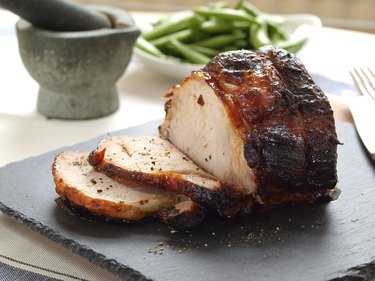
A tender pork roast is a tasty treat for dinner. But if your plan went off track because someone forgot to take the pork roast or loin out of the freezer in time, all is not lost. You can cook a frozen pork loin in the oven — you'll just have to allow extra time for cooking. Alternatively, you can thaw the roast in the microwave or by running cold water over it before popping it into the oven, slow cooker, or Instant Pot.
How to Cook a Frozen Pork Roast in the Oven
Video of the Day
While thawed meats are generally cooked for 20 minutes per pound, an additional 10 to 20 minutes per pound is necessary to ensure the frozen pork is fully cooked. So, for a 3-pound frozen pork roast, you'll want to cook it for at least an hour and a half.
Video of the Day
Here's how to cook a frozen pork roast in the oven.
- Heat the oven to between 325 and 350 degrees Fahrenheit.
- Sprinkle the pork roast or loin with a mixture of condiments and spices that might include brown sugar, chili powder, cumin, garlic, honey, mustard, onion, pepper, and salt.
- Place the frozen pork in a roasting pan and add 1/2 to 1 cup of apple juice, beer, broth, wine, or water to the pan.
- Cover tightly with foil or put the lid on the roaster pan and put it in the oven.
- Heat until the internal temperature of the pork reaches at least 145 degrees Fahrenheit.
How to Cook a Pork Roast in the Slow Cooker
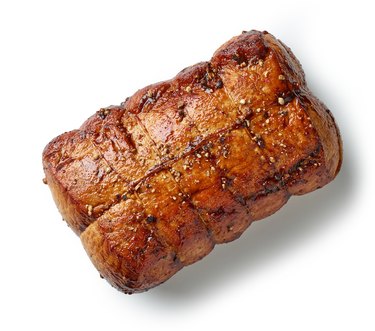
Although there are recipes for cooking pork roast from frozen in a slow cooker, it is not recommended by the USDA or National Pork Board. The slow cooker takes too long to bring the roast to a temperature high enough to kill bacteria.
Before cooking a pork roast in a slow cooker, thaw it. Then place it in the slow cooker. and add spices and at least 1/2 cup of water or other liquid. Cover and cook on low for six to eight hours or high for four to five hours. Remove the pork roast when the internal temperature is at least 145 degrees Fahrenheit.
How to Cook a Pork Roast in an Instant Pot
Cooking a pork roast from frozen in an Instant Pot is not recommended. First, thaw the pork roast and then sear it in a frying pan in a little hot oil to add flavor and keep the juices in the roast. You can also set an Instant Pot on sauté and brown the pork on all sides in 1 teaspoon oil.
Alternatively, put the thawed pork directly into the Instant Pot. Add your favorite spices and 1/2 cup of broth, juice, or water. Cook at 10 minutes per pound on the meat/stew setting. If the internal temperature of the roast hasn't reached 145 degrees Fahrenheit, cook the pork 10 to 15 minutes longer to ensure that it reaches a safe temperature.
Thaw a Frozen Pork Roast
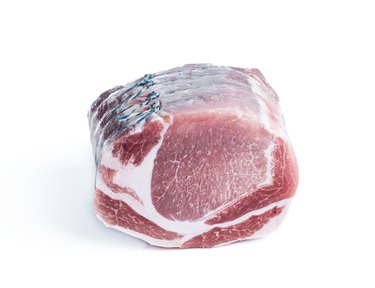
If there's enough time, you can thaw a pork roast before roasting it. To thaw in the refrigerator, allow three to five hours per pound for a small roast and four to seven hours per pound for a large roast. Set the roast in a roaster pan or casserole dish to prevent the juices from leaking into the refrigerator.
To thaw in the sink, leave the pork in its plastic wrap or put it in a resealable plastic bag. Set the roast in the sink and cover it with cold water. Change the water every 30 minutes until the roast has thawed. Cook immediately.
You can also thaw a pork roast in the microwave. Remove all the packaging from the pork and place it in a microwavable casserole dish. Your microwave probably has a defrost function. Set it for the correct number of pounds. If the microwave doesn't have a defrost function, set it at 50 percent power and microwave for five to 10 minutes per pound. Cook the roast immediately.