What Are the Different Types of Roux?

What Are the Different Types of Roux? thumbnail
Roux is used to thicken sauces, gravies and soups.

Roux is a cooked mixture of flour and fat used to thicken sauces, gravies and soups. It's made by heating equal parts flour and butter until your concoction is the consistency of cake frosting. Depending on how long it's cooked, you can make white, blond, brown or dark brown roux (pronounced "roo"). If you make it in a big batch, it'll keep frozen for months -- try dividing it into ice cube trays -- or in the fridge for more than a week. Making a bigger batch will lessen the likelihood of burning it, and some cooks like keeping roux around the kitchen. Does this Spark an idea?

  1. Simple Science

    • Heating flour expands the starch in it. When combined with the butter, which makes the flour malleable, your mixture can be stiffened into a paste and can be added to a sauce or soup to thicken it. The word "roux" is from a French word for "reddish brown," or "red-haired." Depending on which cook you ask, there are either three or four types of roux. Since dark brown roux is a poor thickening agent, some cooks don't count it as a roux.

    Basics

    • In a heavy-bottomed pan over medium heat, melt your butter, then add a pinch of all-purpose flour. If the butter bubbles, pour in the rest of your flour, stirring with a wooden spoon. In three to five minutes, you'll find the mixture has the consistency of cake frosting. The longer you cook it -- continually stirring -- the darker it gets. Don't let it burn.

    Colors
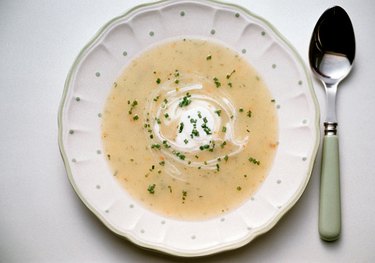
    • White roux can thicken potato soup.
      White roux can thicken potato soup.

      White roux needs less than five minutes to cook. This is most often used in white sauces. White soups like potato and milk-based soups also use a white roux. Blond roux is cooked a bit longer and comes out a pale golden color. It's used to thicken and enrich stock-based soups. It adds a bit of nutty flavor.

      Brown Roux is cooked longer still. This is the color of a perfect pancake and creates a rich nutty aroma. But when the flour is cooked long enough to reach this color and taste, it loses some of its thickening power, so more is needed. This roux is generally used in chowders and gumbos. Dark Brown Roux is cooked the longest and is used more for its flavor than thickening.

    Considerations

    • If you're using roux primarily as a thickening agent, the two lighter shades do the best job. If you're looking to add flavor, use darker roux for its nutty taste. In addition, you can use oil in place of butter, depending on the flavor you want to add.

Related Searches:

References

Resources

  • Photo Credit Jupiterimages/Comstock/Getty Images Eising/Photodisc/Getty Images

Comments

You May Also Like

  • About Roux

    There are many sauces and dishes that include roux, which is a traditional thickening agent used in many different kinds of cooking....

  • How to Make a Room Divider

    A room divider can serve many purposes in addition to dividing a room. A room divider can be found in small rooms...

  • The Fundamental Techniques of Culinary Cuisine

    Mise en place, French for "to put in place," but used in English to mean having everything in place ahead of time,...

  • How Many Different Types of Dachshunds Are There?

    Dachshunds are small dogs, originally hailing from Germany, that were bred to hunt. Their long, low shape means that they can hunt...

  • How to Make a Dark Roux

    Cajun and Creole recipes invariably begin with the words "make a roux". A roux is a simple mixture of flour and fat,...

  • Different Types of BBQ Sauces

    Recipes for barbecue sauce vary dramatically from state to state and sometimes from region to region within a state. Regional barbecue sauce...

  • How to Cook Fish Soup

    Popular the world over, fish soup has as many varieties as there are fish in the ocean. From Russia to the Philippines,...

  • How to Make a White Roux for Cream Sauces

    Light cream sauces are a Louisiana favorite. Crab and crawfish cream sauces are served as accompaniments to a variety of seafood, including...

  • How Many Types of Warts Are There?

    Warts are skin growths caused by HPV or human papillomaviruses. Over 100 different HPV infections are known to researchers and these viruses...

  • Different Types of Soup

    From broths to bisque, there are numerous types of soup out there. Each type is unique in the way it is made...

  • Types of Cooking Degrees

    Are you considering a new career in the culinary business? There are several different types of cooking degrees for you to consider....

  • How to Make a Roux

    A roux is a cooked mixture of flour and a cooking fat, like vegetable oil, that is used to thicken sauces and...

  • Make a Roux

    Learn how to make a roux with this easy recipe. Get cooking tips and techniques in this free culinary video.

  • How to Thicken Seafood Chowder

    Thick, creamy and packed with fresh seafood, a hearty chowder is a warming dish to serve for lunch or dinner on a...

  • About Different Types of Accounting

    Comments. Video Transcript. Hi, my name is Shawn Jones, adjunct professor here at Argosy University. Today we're talking about different types of...

  • How to Make a Roux for Stew

    A roux is cooked flour (or a flour and oil combination) used to thicken and flavor sauces and stews in Cajun cooking....

  • Types of Stocks and Sauces

    Types of Stocks and Sauces. Stocks and sauces offer a variety of texture and flavor to the foods they're served with. They...

  • What Are the Different Types of Rain Gutters?

    Rain gutters keep water from accumulating on a building's roof. The water is collected in the gutter and routed down to the...

  • How to Fix Lumpy Gravy

    No matter how many times you make pan gravy, lumps have a way of appearing--usually when you least want them. Don't throw...

  • How to Thicken Roux

    Roux is the base for many sauces and gravies. It is made by combining equal, or near equal, parts of fat and...

Related Ads

Know Your Knives: Josh Ozersky’s Comprehensive Guide

I have a lot of knives. You probably do too. I really don’t know what to do with them all. There’s a Chinese cleaver, aï؟½

Featured