Doing Piecework Quilting
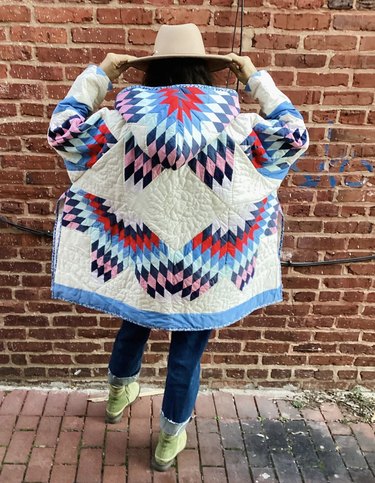
Though piecework quilting refers to making quilts from pieces of fabric, the fact is piecework and quilting are two separate crafts. Piecework is the practice of joining small fabric shapes together to create the top layer for a quilt, which can often be intricate works of art. Patchwork is a term often used to mean the same thing, though it is itself only one piecework method. Anybody can learn to do piecework quilting, but it takes a lot of time and patience to complete a finished quilt.
-
Patchwork
-
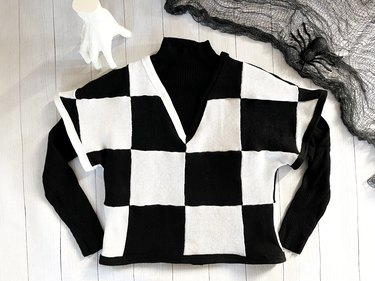
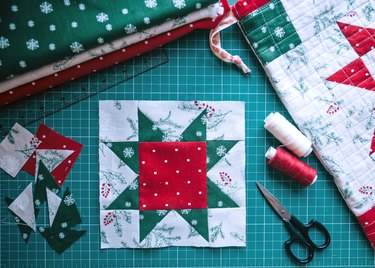
Piecework can involve a number of techniques to create the individual blocks that are the sections that make up a quilt top. Patchwork is a method of sewing a number of small pieces of fabric together that are typically cut in geometric shapes to create a block, which is one part of a larger pattern that makes up the quilt's design. Notions such as lace and buttons may be added to some patchwork blocks.
Other Piecework Methods
-
Appliqué is a piecework method that involves attaching small cuts of fabric to a block to create a desired image. Individual quilt blocks can include embroidered or painted designs. Another method involves weaving small strips of fabric to create individual blocks. Today, paper piecework also known as foundation piecing allows for greater control over extremely intricate designs. By sewing fabric shapes directly onto a paper backing, quilters can work with very small pieces, creating portraits and other detailed images from fabric that are impossible with traditional patchwork techniques.
-
Cutting Pieces
-
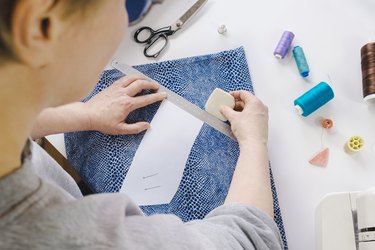
A quilt top can be made up of hundreds to a couple of thousand small fabric pieces. For the pattern to work, each piece must be cut to an exact shape. This is easier accomplished when you use a template for each shape. Cut a template from the original pattern on cardboard or thin plastic. Cereal boxes or plastic reclaimed from everyday product packaging is a good source for templates. Place the template on fabric that has been folded with the face turned to the inside to cut two reverse pieces at once. Use a pencil to make multiple tracings over the reverse side of the fabric. Cut along the traced lines with a rotary cutter that resembles a pizza slicer on a cutting mat to reduce the hand fatigue involved with scissor cutting.
Building Blocks
-
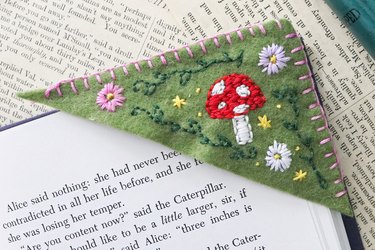
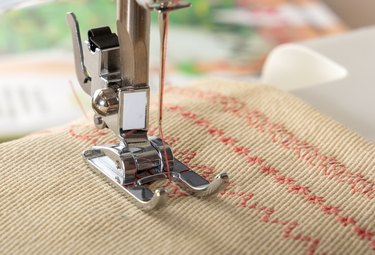
Sewing the pieces together can be done by hand or by machine. Pay attention to the seams where three or more pieces meet, turning the seam so that it rests flat and does not bunch or create an unsightly lump. When working with a shallow seam allowance, finish the outer edge of seams with a simple blanket stitch to protect the fabric from fraying and later causing the pieces to separate.
Quilting Methods
-
The quilting process can be done my machine or by hand. In hand stitching, the lines of stitching typically parallel the seams of patchwork. Add visual interest to large borders of fabric framing the piecework with decorative stitch patterns that include diagonal lines, zigzags or large curlicues that can be first drawn on to the fabric with a pencil. Some informal designs such as a Crazy Quilt can be finished with a simple tie quilting method. Simply pass a short section of yarn through the quilt layers with a large needle and back up to the top. Tie the two ends of yarn in a knot and trim the yarn one or two inches from the knot, allowing the yarn ends to become part of the overall design.
-
References
- University of Illinois: History of Quilts
- The Regency Redingote: The Patchless Regency
- The Designers Workshop
- Paper Panache: Mystery Block #61 Solution
- BurdaStyle: Multifunctional Blanket Stitch
- Quilts Complete: Simple Quilting Stitches
- QuiltersCache: Quilt Blocks Galore
- PBS: Quilting Glossary
- Fave Quilts: Piecework
- Louisiana Folklife: About Quilts – An Overview
- Photo Credit Comstock/Comstock/Getty Images