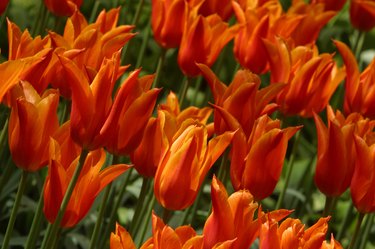
The terms "monocot" and "dicot" are science speak referring to how many seed leaves an embryonic flowering plant has while it's still within the seed. The embryo has either one leaf or two, making it a monocot or a dicot, respectively. Monocots and dicots differ in four anatomical areas: flowers, leaves, roots and stems.
Monocots and Dicots: Getting Technical
Video of the Day
Monocots and dicots are shortened versions of the terms monocotyledons and dicotyledons. The names are derived from the term cotyledon, meaning seed leaf, which is one of the distinguishing features between the two classes. The terms mono and di, meaning one and two, refer to the number of these leaves that the plants produce. There are approximately 65,000 species of monocots and around 170,000 different species of dicots.
Video of the Day
Monocots and dicots are both types of Angiosperms, or plants that produce flowers. Monocots and dicots are both fertilized by pollen and grow from a seed. Both groups use their leaves to photosynthesize and both carry nutrients from the ground through roots and along the vascular systems within their stems. However, the patterns and numbers of these features differ slightly between monocots and dicots, allowing the two subdivisions to be distinguished.
Characteristics of Monocots
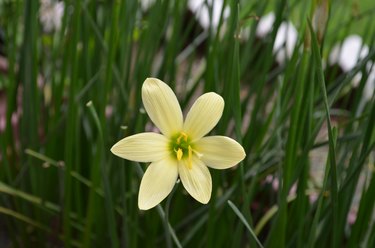
The number of flower parts on a monocot is divisible by three. The lily is an example of a monocot. A monocot seed produces one initial seed leaf when it germinates. This seed leaf provides the plant with its first supply of nutrients. When monocot plants have developed enough to produce additional leaves, the leaves contain large veins that run parallel to each other. This can be seen in plants such as grasses. These leaves allow the plant to obtain energy through the process of photosynthesis. The vascular system that runs through the stem of a monocot lacks a strictly organized pattern. The pollen grains produced by monocot flowers contain one pore or furrow.
Characteristics of Dicots
The total number of flower parts on a dicot is either divisible by four or five. Geraniums are dicots. When dicot seeds germinate, they produce two seed leaves. Mature dicot leaves contain many small veins, with smaller veins extending outwards from the major veins. The vein system in a dicot leaf has an irregular, web-like appearance. Clear examples of dicot leaves can be seen growing on the majority of trees. The vascular system within a dicot stem is structured. The vascular tissue is organized into a series of circles that form around each other, giving the stem a cylindrical form. Unlike monocots, dicots can often produce a layer of bark around them. Dicots produce pollen grains with three pores or furrows.
The Problems With Classification
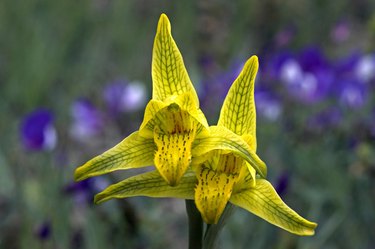
Although monocots and dicots can generally be classified according to the common features such as the number of flower parts or the pattern of veins in the plant's leaf, there are some exceptions. For example, palms are monocots but they have the ability to produce a type of bark, which is a feature that is usually associated with dicots. Other classification problems can occur when a feature is difficult to identify. For example, some plant species can produce flowers that have some small or translucent petals that are difficult to spot when counting the number of flower parts.