eHow launches Android app: Get the best of eHow on the go.

How To

How to Make Your Own Glass Cleaner

Contributor
By eHow Contributing Writer
(104 Ratings)

For a quick-drying, streak-free glass cleaner, use this easy recipe that has been handed down through the ages.

Difficulty: Easy
Instructions

Things You'll Need:

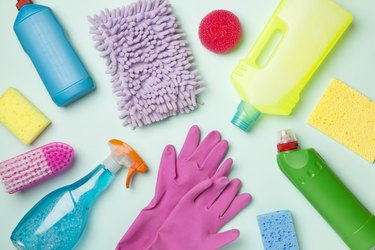
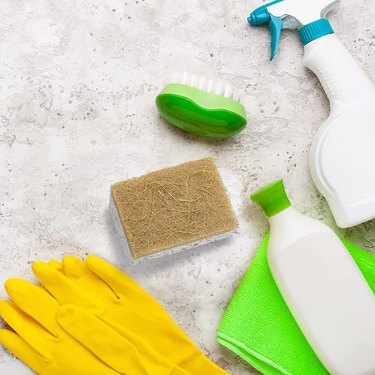
  • Spray Bottles
  • Cleaning Cloths
  • Cleaning Cloths
  • 1/2 c. ammonia
  • 1/2 c. water
  • 1/2 c. rubbing alcohol
  1. Step 1

    Gather 1/2 c. ammonia, 1/2 c. isopropyl rubbing alcohol and 1/2 c. water.

  2. Step 2

    Mix.

  3. Step 3

    Pour into spray bottle.

  4. Step 4

    Spray on glass, tile counters, stainless steel or linoleum floors.

  5. Step 5

    Wipe with clean, dry, lint-free cloth.

Tips & Warnings
  • This recipe is great for car windows and windshields.
  • This glass cleaner will not kill bacteria.

Comments  

| View All 12 Comments

kmr28 said

Flag This Comment

on 1/30/2009 i have used a large sponge(soft) with warm soapy water and drying with a clean wash rag works great to clean any mirror with toothpaste spots. when cleaning a shower with glass doors i use comet(spray) or arm&hammer oxy bathroom cleaner and use a squeegie after rinsing.

Flag This Comment

on 8/23/2007 In my expereince, as owner of the auto glass center in belmont Ca. newspaper is true disaster because it scratches windsheilds...

males74 said

Flag This Comment

on 11/4/2006 Please read this regarding your window mixture:


Definition

This is poisoning from swallowing or breathing in large amounts of window cleaner.

Poisonous Ingredient

Older window cleaners may contain ammonia, ethanol, methanol, or isopropyl alcohol.

New types of window cleaners are considered safer.

Where Found

Some window cleaners
Symptoms

Note: Most symptoms are seen with older window cleaners containing the toxic ingredients listed above.

Lungs and airways
Breathing difficulty (from inhalation)
Throat swelling (which may also cause breathing difficulty)
Eyes, ears, nose, and throat
Severe pain in the throat
Severe pain or burning in the nose, eyes, ears, lips, or tongue
Loss of vision
Gastrointestinal
Severe abdominal pain
Vomiting
Burns of the esophagus (food pipe)
Vomiting blood
Blood in the stool
Heart and blood
Hypotension (low blood pressure) develops rapidly
Collapse
Skin
Irritation
Burns
Necrosis (holes) in the skin or underlying tissues
Nervous system
Sleepiness
Stupor
Coma
Severe brain damage
Home Treatment
DO NOT make a person throw up unless told to do so by Poison Control or a health care professional. Seek immediate medical help.

Before Calling Emergency

Determine the following information:

The patient's age, weight, and condition
The name of the product (as well as the ingredients and strength, if known)
The time it was swallowed
The amount swallowed
Poison Control, or a local emergency number

The National Poison Control Center (1-800-222-1222) can be called from anywhere in the United States. This national hotline number will let you talk to experts in poisoning. They will give you further instructions.

This is a free and confidential service. All local poison control centers in the U.S. use this national number. You should call if you have any questions about poisoning or poison prevention. It does NOT need to be an emergency. You can call for any reason, 24 hours a day, 7 days a week.

Take the container with you to the hospital, if possible.

See National Poison Control center.

What to expect at the emergency room

The health care provider will measure and monitor the patient's vital signs, including temperature, pulse, breathing rate, and blood pressure. The patient may receive:

Fluids by IV
Medicines to treat symptoms
Activated charcoal
A nasogastric (NG) tube thru the nose into the stomach to empty the stomach (gastric lavage)
Endoscopy -- camera down the throat to see burns in the esophagus and the stomach
Medicine (antidote) to reverse the effect of the poison
Oxygen
Breathing tube
Bronchoscopy -- camera down the throat to see burns in the airways and lungs
Irrigation (washing of the skin) -- perhaps every few hours for several days
Skin debridment (surgical removal of burned skin)
Expectations (prognosis)

How well a patient does depends on the amount of poison swallowed and how quickly treatment was received. The faster a patient gets medical help, the better the chance for recovery. If patient survives the first 72 hours, complete recovery is very likely.


Update Date: 5/11/2006

Updated by: Eric Perez, MD, Department of Emergency Medicine, St. Luke's-Roosevelt Hospital Center, New York, NY. Review provided by VeriMed Healthcare Network.


A.D.A.M., Inc. is accredited by URAC, also known as the American Accreditation HealthCare Commission (www.urac.org). URAC's accreditation program is the first of its kind, requiring compliance with 53 standards of quality and accountability, verified by independent audit. A.D.A.M. is among the first to achieve this important distinction for online health information and services. Learn more about A.D.A.M.'s editorial process. A.D.A.M. is also a founding member of Hi-Ethics (www.hiethics.com) and subscribes to the principles of the Health on the Net Foundation (www.hon.ch).

Anonymous

Anonymous said

Flag This Comment

on 11/22/2005 I make about 50k a year washing windows in Hawaii. While the ammonia mix works well, it can damage important stain or paint around the edges. I would recommend getting yourself a squeegee and buying solution from the professionals that contains no ammonia (ABC window supply), either that - or hire me. You can do it once the right way or 4 times the wrong way. Using steel wool is fine on any glass surface, as long as you use #0000 extra fine grade steel wool. Quadruple grade steel wool is so soft it will not scratch any glass surface, no matter how hard you rub. Important note: Do not use steel wool on any tinted or filmed surface as it can damage those surfaces. And dont even think of getting steel wool wet, because after it gets wet it's pretty much useless. So in conclusion, wash it once really good with soap and water, then after you towel dry it you will notice the spots starting to appear, then bust out your #0000 grade steel wool, and rub on the spots till they disappear. It takes elbow grease and effort, but it works every time.

Anonymous

Anonymous said

Flag This Comment

on 11/22/2005 I have found that using coffee filters works better than paper towels or newspaper.

Post a Comment

Post a Comment
  • Have you done this? Click here to let us know.
I Did This

Related Ads

Home & Garden

Ruby Bayan,

Meet Ruby Bayan eHow's Home & Garden Expert.

Get Free Home & Garden Newsletters

Copyright © 1999-2009 eHow, Inc. Use of this web site constitutes acceptance of the eHow Terms of Use and Privacy Policy.   en-US Portions of this page are modifications based on work created and shared by Google and used according to terms described in the Creative Commons 3.0 Attribution License.

eHow Home and Garden
eHow_eHow Home and Garden