Instructions for Hand Embroidery on Sarees
A saree (also commonly called "sari") is a long piece of fabric wrapped around the body with a loose end that is thrown over the shoulder. While some sarees are unembellished, most sarees are decorated with embroidery and mirrors. A cotton saree can handle heavy embroidery, while a delicate silk saree requires very light stitching. For a first saree embroidery project, choose a sturdy fabric and a simple design that mainly focuses on the end that is visible over the shoulder.
Things You'll Need
- Saree scarf or fabric
- Embroidery pattern
- Transfer paper
- Pencil or rotary transfer tool
- Embroidery hoop
- Tissue paper (optional)
- Thread
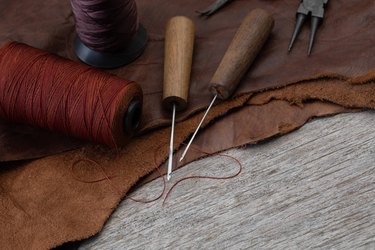
- Embroidery needles
- Small scissors
Instructions
-
-
1
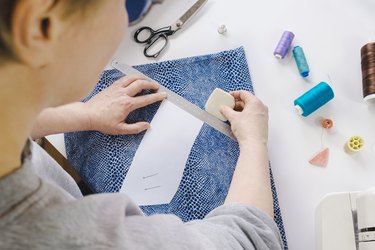
Transfer your pattern to the saree. Place transfer paper on the area of fabric to be embroidered and position the pattern over the transfer paper. Using a pencil or metal rotary transfer tool, trace the design by following the lines in the pattern.
-
2
Separate the two circles of the embroidery hoop. Place the smaller hoop underneath, on the back side of the saree. Set the larger circle over the top, on the right side of the fabric. Press firmly to get the fabric stretched tightly between the two hoops. If over-stretching of the saree is a concern, place a piece or two of tissue paper underneath the fabric before setting it in the hoop. Make sure to use as large of a hoop as possible; after the embroidery has been started, the hoop cannot be shifted and placed over areas that have been embroidered.
-
-
3
Cut an appropriate length of thread for your design. Cut the end at an angle. Thread the angled end of your chosen embroidery thread through the eye of the embroidery needle. Tie a knot at the end of the thread.
-
4
Begin embroidering by pushing the needle up through the back of the saree. Use your chosen stitch pattern to fill in the design, changing thread color when necessary. Take care not to pull the stitching too tightly, as it will cause puckering in the fabric. Continue to stitch until the design is complete. Tie a knot in the thread and cut the end of the thread off close to the saree. Move the embroidery hoop to a new area when finished.
-
5
Remove the embroidery hoop when all of the embroidery is finished. Lightly steam the saree, if the fabric is silk, to remove any wrinkles or quickly iron the saree if it is cotton.
-
1
Tips & Warnings
Patterns for saree embroidery are available on the Internet.
Make sure that the pattern transfer method you use is completely covered with your embroidery.
References
Resources
- Photo Credit femmes en saris image by harmonie57 from Fotolia.com