Things You'll Need
Lemon trees
Pruning shears
Gloves
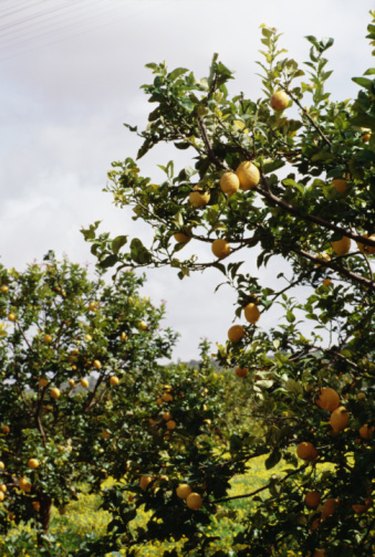
Pruning lemon trees is important to help them grow and thrive. You must cut off any dead branches or simply thin the tree so that strong healthy branches have room to produce abundant fruit. The three lemon trees most commonly found in California are the Lisbon, Eureka and Meyer. Pruning these trees is no different than pruning any other type of lemon tree. Pruning does not have to take place every year; just prune the trees when they need to be thinned out or to get rid of diseased branches.
Step 1
Wait until all the fruit on the tree has ripened and been picked. You do not want to prune the branches while fruit is still growing on it or that fruit will die.
Video of the Day
Step 2
Cut off the branches that are dead or diseased. Broken branches should also be cut. Cut the branch at the base, right where it begins at a larger branch. If it is one of the larger branches that you need to cut off, cut it right where it meets the trunk of the tree.
Step 3
Cut off any branches that touch the ground. If they are close to the ground without any fruit, they may touch the ground once weighted down with fruit. Having them touch the ground is invitation to ants and other bugs that crawl on the ground. They can seriously damage your tree and fruit crop.
Step 4
Cut off the small branches. These branches should be thinner than a pencil. These branches are no good for growing fruit, because they are not strong enough to support them.
Step 5
Prune any branches that cross the tree. Looking at the tree, if the branch grows from the right but crosses the tree to the left, cut it off. It will begin to choke the other healthy branches and cut off air and water circulation in the tree.
Step 6
Prune any branches that stick out past the general shape of the tree. This is more of an aesthetic pruning than a necessary one for fruit production. You can prune the tree to make a specific shape, height or width. Simply prune the branches that extend beyond this shape and size.
Tip
Wear gloves and long-sleeved shirts when pruning to prevent your hands and arms from getting scratched. Lisbon trees are known for their thorns, but the other types have few thorns and sharp branches.
Video of the Day