Things You'll Need
Dry cloth
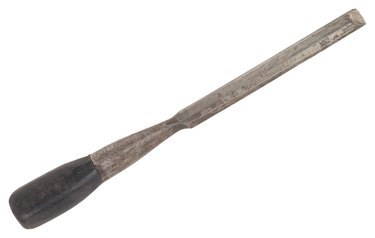
Chisel
Hammer
Drill and masonry bit
Sponge
Hydraulic cement
Trowel or putty knife
When pipes pass through basement walls underground, ground water can leak in around the pipes and through the concrete. Many times shifting soil or a house settling can create a gap around the pipe and an escape route for water before it reaches the foundation drain pipe. Most repair materials do not bond well with concrete to fill the gap securely and completely, but hydraulic cement works well.
Step 1
Locate the pipe in the basement wall that needs sealing. Use a dry cloth to blot up water that may have leaked through the hole. If there is a substantial flow, postpone the project until water stops moving through the hole.
Video of the Day
Step 2
Use a chisel or a drill equipped with a masonry bit to carefully remove some of the surrounding wall near the pipe. The opening should be about a half-inch in diameter and approximately three-quarters to one-inch deep for a good repair.
Step 3
Remove any debris or dirt from the hole with a wet sponge. Slight dampness will allow for a better bond with the repair material.
Step 4
Press hydraulic cement into the hole with a small trowel or putty knife. Pack the material in tightly and make sure the cement connects with both the pipe and surrounding wall. If necessary, fill the gap in layers of cement to build up the area slowly.
Step 5
Work rapidly because hydraulic cement hardens quickly. Feather the material out over the wall to increase the bond and help hide the patch job. Don't touch or adjust the pipe's position until the cement has fully hardened, according to the manufacturer's instructions.
Tip
Expanding foam can be used in deep holes to use less hydraulic cement. Fill two-thirds of the gap with foam and finish off with the hydraulic cement. Make sure the pipe is clean and free of grease or other chemicals.
Warning
Be careful not to damage the pipe when chiseling or drilling out around the hole. Avoid using Goop! around the hole. The material is water resistant but not water proof enough to last long.
Video of the Day