Things You'll Need
Water-proof pen
Packaging tape
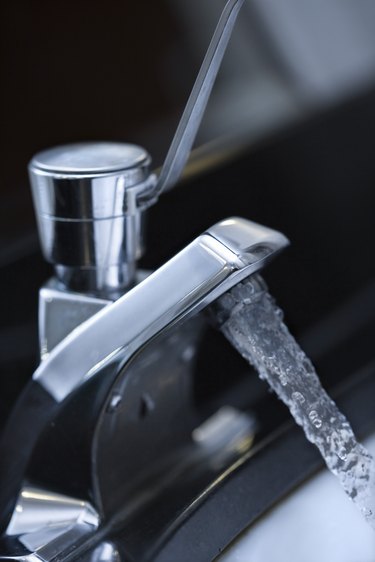
One of the leading causes of stomach ulcers and stomach cancer is the bacteria, Helicobacter pylori, found in surface and well water. These bacteria are found in nearly everyone's stomach. It was unknown where the bacteria came from until 1998 when Penn State researchers found H. pylori in water throughout Central Pennsylvania. Commercial home testing kits are not currently available, so to perform any testing, you must request a kit from a university extension service then send a water sample to the lab.
Step 1
Navigate to the Penn State College of Agricultural Sciences Cooperative Extension on your computer. Click on "Air, Soil and Water" under the "Energy & Natural Resources" tab. Select "Water Resources Extension" then click on "Publications" under the "Additional Resources" tab on the right side of the page. Choose "Water Pollutants, Testing, and Treatment Publications." Click on "Water Testing" then "Find a local water testing lab." Use the list provided to find a testing lab near you.
Video of the Day
Step 2
Contact the lab to verify that it tests for H. pylori and request a water test kit if it does this testing. If not, ask if there is a lab nearby that performs such testing or contact the next closest lab to where you live. The lab will send you a complete test kit. The cost of testing varies by lab and how much testing is done. As of 2011, prices range from $15 to $100.
Step 3
Follow the directions provided with the test kit once it arrives. Remove the seals from the bottles provided in the kit. Turn the faucet on cold and let it run for two minutes. The water must be from a tap that gets the most use but must not have a leak. Fill the bottle but do not touch the inside of the lip with your hands or the tap spigot. Place the cap back on the bottle and twist it tightly. Repeat with any other bottles provided in the kit.
Step 4
Write your last name on the labels of each bottle. Fill out any forms or paperwork provided with the test kit.
Step 5
Place each bottle in the included zip-lock bags. Remove any excess air then close the bags. Place the bottles and other equipment into their original Styrofoam containers. Place the Styrofoam back in the box and seal it.
Step 6
Attach the shipping label to the box if one was provided by the lab. If not, ship the package overnight delivery. It must arrive at the lab within 30 hours. It may take up to two weeks for the test results.
Tip
You do not need to test for H. pylori if you use municipal water because the bacteria are killed during the chlorination process. Only well water needs to be tested, especially if someone in your household has developed ulcers, the well has not been maintained regularly and is in rough condition.
Warning
Be careful when opening the test kit package. Do not tear the Styrofoam or box since these are used to ship the water back to the lab.
Skipping steps, ignoring directions or taking too long to ship the water sample may corrupt the test results. Always follow the test kit directions. Some labs require the water to arrive within 24 hours.
Video of the Day
- Centers for Disease Control and Prevention: Helicobacter Pylori and Peptic Ulcer Disease
- U.S. Water News Online; Ulcer-Causing Bacteria Found in Surface Water; June 1998
- Penn State Cooperative Extension: Drinking Water Testing Program
- Washington State Laboratory of Hygiene: Helicobacter Pylori Testing
- PennStateCooperativeExtension: Find a Local Water Testing Lab