Things You'll Need
Faucet-mount water purifier
Pliers
Shower-head water purifier
Teflon tape
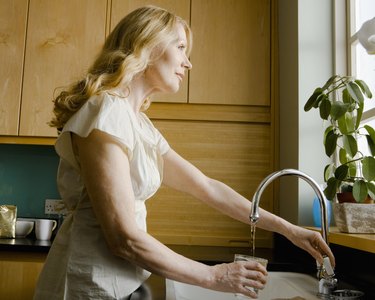
A good home water softener is very effective at removing calcium and magnesium compounds from the water supply and replacing those "hard" minerals with "softer" sodium compounds. A water softener offers a variety of benefits. It helps water perform better with soaps, prevents the buildup of scale that can clog household plumbing and it may even improve the flavor of tap water. If you'd like to remove chlorine, you will need to supplement your water softener with a water purifier. The most popular systems for removing chlorine include whole-house, point-of-entry water filters, point-of-use countertop or under-sink water filters and faucet-mount water filters. Because faucet-mount systems can be easily installed and removed by do-it-yourselfers, they are appropriate for both homeowners and renters.
Removing Chlorine From Drinking Water
Step 1
Select a faucet-mount water purifier that uses replaceable, activated charcoal filters. Look for a model with a capacity of 400 or more gallons that can remove at least 95 percent of water-borne chlorine. The best models will feature a knob or switch that allows you to activate the purifier when you want drinking water, and bypass the filtration for water used for household cleaning purposes. Ensure the water purifier comes with several adaptors that allow it to fit the most common faucet fittings.
Video of the Day
Step 2
Remove the aerator from the faucet, using the pliers. Determine if the water purifier will fit directly in the aerator's place. If not, select the appropriate adaptor.
Step 3
Position the water purifier in place at the end of the faucet . Tighten its fitting into place, using pliers.
Step 4
Turn on the faucet. Flip the purifier to its "On" position.
Removing Chlorine From Shower Water
Step 1
Select an in-line water purifier designed for use in the shower. Look for a unit that is designed to remove at least 90 percent of the chlorine from your water.
Step 2
Remove the shower head, using the pliers. Mount the water purifier in its place and tighten it firmly. Attach the shower head to the end of the water purifier. Wrap the threaded end of the pipe fittings with the teflon tape to prevent leakage.
Step 3
Turn on the shower.
Tip
Make sure you have a source for replacement filters for your water purifier. Some brands are more readily available than others.
Some models of water purifiers have indicators that tell you when it's time to replace the filter.
The softened water in the shower will allow your soap to suds up more easily, and the chlorine-free water will be gentler to your eyes, skin and hair.
Video of the Day