How to Steek Knitting

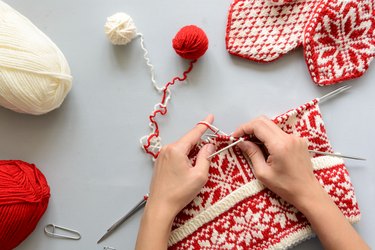
The first time most knitters hear what steeking entails they are shocked. Let me lay it on the line for you: it means cutting your knitting. I know, it sounds like a horrible idea and counter to everything that knitters hold dear--but trust me--it's not as bad as it sounds. Used especially in Fair Isle or multi-strand knitting done in the round, steeking allows you to knit the body of a sweater without having to divide your knitting into front and back sections--and that's definitely a good thing. Steeking can be used to insert sleeves, zippers and even pockets into a seamless section of knitting--and there are two ways to do it. Here they are.

Things You'll Need

  • Knitting needles
  • Yarn
  • Scissors
  • Straight Pins
Show More

Instructions

  1. How to Do Traditional Steeking

    • 1

      Follow your pattern, presumably you are working from the bottom up, although you could probably do this with a top-down sweater as well, until the row where the arm holes would start.

    • 2

      Bind off as many stitches as you need for the base of the arm hole (6 to 10 stitches should be enough, depending on the size and your gauge). Repeat on the opposite side of the garment.

    • 3

      On the next row, as you come to the bound-off stitches, cast on the same number as bound off and continue to work the sweater in the round until you reach where the top of the arm hole belongs.

    • 4

      Drop the 6 to 10 stitches that you had cast on for the steek. It works best if you first knit those stitches, knit the next stitch in the pattern, and then shift that last stitch back to the right needle to hold while you then drop the steek stitches down to where they were cast on. This way you're in the right place to continue on with your knitting without any pulling.

    • 5

      Cast on the number of stitches required to replace the steek stitches on the next round and knit through the rest of the pattern, binding off at the neck (or hem).

    • 6

      Cut the center of the steek stitches that were dropped (the section that looks like ladders of yarn in the middle of your sweater).

    • 7

      Tie off the loose ends in small groups, making sure not to pucker the knitting around the opening or leave knots so large that they could be uncomfortable to the wearer.

    • 8

      Pick up the number of stitches around the arm hole to knit your sleeve or fit and sew your premade sleeve into the new arm hole, depending on your pattern's construction method.

    How to Do Sewn Steeking

    • 9

      Knit the body of your sweater in one piece, top down or bottom up, doesn't matter, as you don't have to do anything while knitting to work this type of steek.

    • 10

      Lay your garment flat and identify where the armholes, zippers or pockets need to go, marking the beginning and ending of that section with straight pins.

    • 11

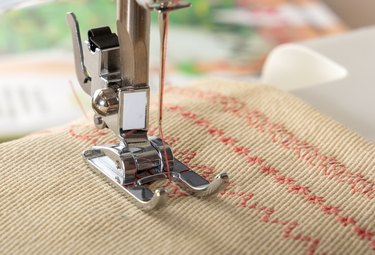
      Sew a line of tight stitches around the marked area, reinforcing the top and bottom of the opening-to-be with an extra line of stitching or two.

    • 12

      Cut inside the sewn area to make an opening for your sleeve, pocket or zipper.

    • 13

      Pick up stitches just outside the machine stitches or sew in your extra pieces, using the sewn area as selvage, to finish your garment.

Related Searches:

Comments

  • cdorsey47 Sep 10, 2009
    Excellent!!!! 5* and recommend

You May Also Like

  • How to Make Shetland Knitwear

    Shetland knitting is a specific style of knitting particular to the Shetland Islands of Scotland. Renowned for bright colors, eye-catching patterns and...

  • How to Cook Steel-Cut Oats

    Unlike the rolled oats regularly cooked as a hot breakfast cereal, steel cut oats are cut into pieces but left otherwise intact....

  • How to Gauge and Swatch in Knitting

    Before you knit a garment or anything that needs to fit, you should make a gauge swatch. A gauge swatch will help...

  • How to Cable Knit

    A cable is the thick decorative stitch used to pattern woolen garments and pieces. It is so named because the stitches create...

  • How to Make Clothing out of Pieces of Sweaters

    Recycling enthusiasts recreating worn items into new wears can use old sweaters as a base. Recent fall collection previews for the upcoming...

  • How to Knit : Yarn, Needles, Scissors & Other Knitting Tools

    The most basic knitting supplies include stitch markers, stitch holders, various needles, yarn and a good pair of scissors. Gather the necessary...

  • How to Cast Off in Crocheting

    In crochet, the basic stitch is a chain, interlocking each stitch together. This is not like knitting, where one part of the...

  • How to Cast On in Kitchener Rib in Knitting

    One of the difficulties of beginning a project with ribbing is that it often looks messy with a simple cast on. Kitchener...

  • How to Knit With Beads

    Sometimes you just need a little sparkle. Knitwear is wonderfully flexible, versatile and comfortable--but sometimes even the most complicated stitch patterns or...

  • Instructions for Binding Off Knifty Knitters

    The Knifty Knitter is a circular knitting loom manufactured by Provo Craft. Knifty Knitter looms are either circular or oval in shape....

  • How to Knit a Blanket

    Knitting a small blanket is a practical way to build your knitting skills, as you're left with a useful and -- if...

  • How to Knit a Wedding Garter

    Instead of purchasing a wedding garter from a bridal boutique, wear a hand-knit version. A knitted wedding garter will add a handmade...

  • How to Draft a Pattern From a Sweater

    There exists in each woman's closet (and some men's, I'm sure) the perfect sweater, the holy grail of fit, color and fiber...

  • What Does S1 Mean in Knitting?

    Knitting not only requires knowledge of how to complete stitches and projects, but also an understanding of the craft's language. Familiarity with...

  • What Is a Knitting Life Line?

    A knitting life line is contrasting colored yarn threaded through a row. This is a safety net for you, providing a place...

  • How to Sew Knitted Shoulder Seams

    Sweaters take weeks (if not months) to complete, so you don't want to finish your hard work off with just any old...

  • How to Make Steel

    Steel is the second most important man-made building material in the world, next to concrete. It is used for architectural structures, transportation...

Related Ads

Featured