Things You'll Need:
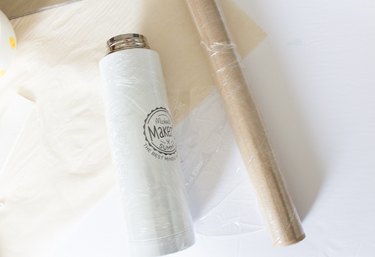
- Fully equipped pottery workshop
- Self-hardening clay
- Kiln-firing clay
- Glazes
- Acrylic paints
- Fine artists' paint brushes
- Water
- 6mm plastic sheeting
- Pottery sculpting tools
- Square plastic dishpan
- Rolling pin
-
Step 1
Fill a plastic wash basin halfway with dried clay trimmings and water. Allow to sit until the clay softens. Stir the mixture until the water and wet clay are evenly mixed to the consistency of a milkshake. Add more clay if needed. This is slip, which is used to make clay stick to itself and to smooth out cracks, wrinkles and imperfections in pottery.
-
Step 2
Pat a ball of clay into a flat circle, as shown in the second photo at TeachPottery.net in Unit Three: Creating Coil Pots.
-
Step 3
Roll a ball of clay back and forth on your work table until it makes a roll 1/2 inch to 1/4 inch in diameter. Wipe a little bit of slip along the sides of your clay roll to moisten it. Wrap the roll around itself to form a flat, coiled circle, as shown in the third photo at TeachPottery.net in Unit Three: Creating Coil Pots.
-
Step 4
Use slip to moisten the flat coil you made in Step 2. Rub the coil to remove all connection lines and make a smoother, more circular shape.
-
Step 5
Continue to roll clay and add coils to the base you made in Step 3. Use slip to bond each roll to the coil base, and rub all the lines and imperfections until they are smooth. Gradually work the coil into a shallow bowl shape.
-
Step 6
Create two more bowl shapes without bases. Rub each of the coiled pot sections you made in Step 4 until all of the connecting lines are smooth. Turn the larger bowl shape upside down and smooth it onto your base pot. Hook your finger inside the pot to carefully smooth out any join lines with slip. If you want a drinking gourd-style vase, you are done. If you want your vase to have a mouth, add a second, much smaller bowl shape of top of the other two. Smooth with slip. Refer to the last photo at TeachPottery.net in Unit Three: Creating Coil Pots for an example of drinking-style vase with a large mouth.
-
Step 7
Smooth your vase all over until all edges are rounded and the mouth of the vase is shaped in whatever manner pleases your eye and satisfies your creative impulse. Allow to dry until white. Check vase daily for any developing cracks. Seal them immediately with slip.
-
Step 8
Glaze and fire as desired if you used kiln-firing clay. Paint as desired using acrylics if you used self-hardening clay. Clean all brushes and clay-shaping tools. Wipe work area clean with a damp rag. Tightly close all glaze and paint pots and put them out of reach of pets or children.
-
Step 1
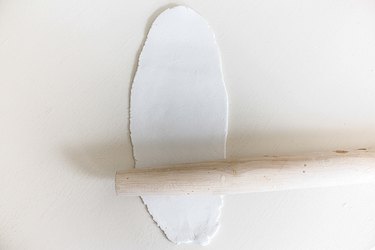
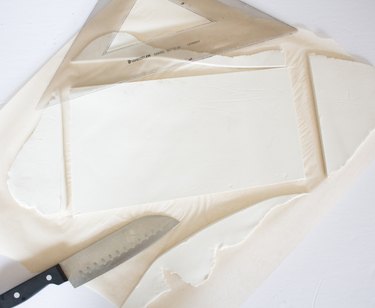
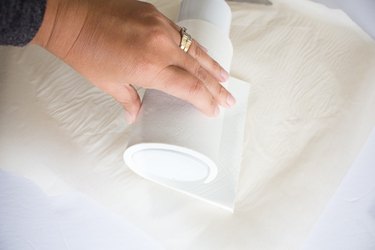
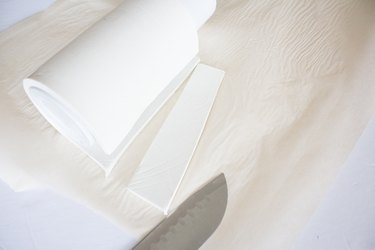
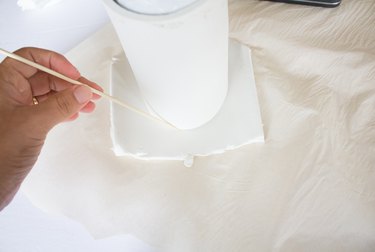
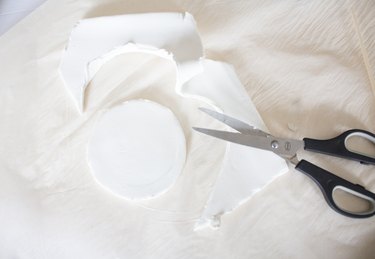
Use a rolling pin to roll a ball of clay between two sheets of 6mm plastic. Cut the clay into square, rectangular or triangular slabs using a plastic picnic knife or clay-cutting tool.
-
Step 2
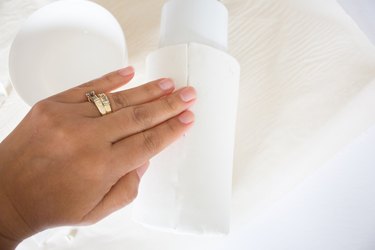
Join four slabs to form a three-dimensional square by applying slip along their sides and pressing the sides together as shown in the diagram at Pottery Magic: Making Slab Pottery.
-
Step 3
Apply slip to the outside of your slab vase and work it around with your fingers until the slab is smooth and all cracks and joint lines are gone. Repeat for the inside of your slab pot.
-
Step 4
Push leaves, flowers or stampers into the clay to make a design. Pull them away before firing, glazing or painting.
-
Step 5
Allow your slab vase to dry until leather hard, then smooth with slip a second time. Glaze and fire as desired after clay has dried to white, or paint with acrylic if you used self-hardening clay. This type of vase is good for delicate flowers such as tulips, hyacinth and crocus. Fill the vase with marbles, insert flowers and fill with water.
-
Step 1
Pinch off a chunk of clay and roll it into a ball. Gradually work your thumbs into the ball while turning it, until you begin to make a bowl shape. Add pinches of clay as needed until you have a large enough bowl shape for the diameter you want for your vase body.
-
Step 2
Work the clay bowl shape into a narrower shape until you are pleased with the diameter and height.
-
Step 3
Apply slip inside and outside your bowl. Smooth out any wrinkles, joint lines or other imperfections. Refer to the photos at Teach Pottery.net: Pinch Pot Tutorial.
-
Step 4
Add more pinches of clay as needed to make a mouth for your vase. Repeat smoothing with slip.
-
Step 5
Allow your vase to dry until it turns white. Glaze and fire or paint as desired.