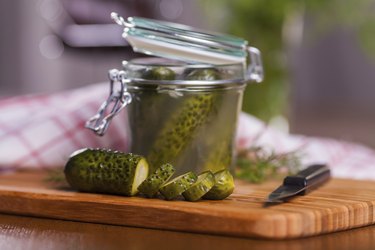
Start to Finish: 45 minutes Servings: 6 Difficulty Level: Beginner
Refrigerating cucumbers in a seasoned brine yields homemade pickles that pack a lot of flavor and a hearty crunch. The ingredients you include in the brine determine whether you create kosher dill, sour, bread and butter, or sweet pickles. Thinly sliced cucumbers may develop the desired flavor after only a few hours of soaking in the brine. But thick pieces of cucumber or whole cucumber fruits may need to soak two or three days before they develop a robust pickle flavor.
Video of the Day
Video of the Day
Ingredients
- 1 pound pickling cucumbers such as Kirby cucumbers
- 1 to 2 cups water
- 1 tablespoon kosher salt
- 2 teaspoons mustard seeds
- 1/4 teaspoon celery seeds
- 3/4 teaspoon black peppercorns, optional
- 1/2 teaspoon red pepper flakes, optional
- 1/2 teaspoon dill seeds, optional
- 1/4 cup chopped dill, optional
- 1 to 2 minced garlic cloves, optional
- 1 cup white wine vinegar or Champagne vinegar, optional
- 1/2 teaspoon turmeric, optional
- 1/3 cup granulated sugar, optional
- 1/4 teaspoon allspice, optional
Directions
Wash the cucumbers. Slice about 1/8 inch off the blossom end of each cucumber with a knife. The blossom harbors enzymes that can make a cucumber limp over time.
Slice the cucumbers into 1/8- to 1/4-inch-thick slices. You can cut thicker slices or spears, if desired. You can also leave smaller 2- to 3-inch cucumbers whole.
Pack the cucumber pieces into 2 pint-sized jars as tightly as you can without breaking or tearing the pieces. The volume of cucumber should be equal between the two jars. Leave about 1/2 inch head space between the cucumbers and the rims of the jars.
Bring 1 cup of water to a boil in a saucepan. Bring 2 cups of water to boil if you are preparing sour pickles.
Add kosher salt, mustard seeds and celery seeds to the saucepan to start a brine. Incorporate additional seasonings, depending on the type of pickles you are preparing. Add black peppercorns, red pepper flakes, dill seeds, chopped dill, minced garlic and vinegar if you are making kosher dill pickles. Add black peppercorns and red pepper flakes if you are making sour pickles. Add minced garlic to the mixture, if desired. Add black peppercorns, red pepper flakes, turmeric, minced garlic, vinegar and sugar if you are preparing bread and butter pickles. Add allspice, vinegar and sugar if you are preparing sweet pickles.
Stir the brine until the salt dissolves. Remove the brine from the heat.
Pour equal volumes of brine into each jar. Seal the jars with their lids.
Refrigerate dill, bread and butter, or sweet pickles overnight before taste testing them. It may take 2 to 3 days for the flavors to thoroughly saturate larger cucumber pieces. Ferment sour pickles at room temperature for 3 days before taste testing them. Continue fermenting them at room temperature until they are sufficiently sour. Transfer them to the refrigerator when they develop the desired flavor.
Refrigerate homemade pickles up to 1 month.
Substitution and Seasoning Tips
Substitute apple cider vinegar, distilled white vinegar or sherry vinegar, if desired.
Include other seasonings in your brine, as desired. For example, add 1 teaspoon of coriander seeds to kosher dill or bread and butter pickles. Bay leaves, cloves, ginger, mace, cardamom, cinnamon sticks, juniper berries and cumin are also included in some pickle recipes.
Substitute pickling spice for all of the seasonings, except for the dill and dill seeds in kosher dill pickles.
Food Safety and Storage Warnings
Clean your jars thoroughly before filling them with pickles and brine to prevent contamination. The most effective way to clean jars and lids is to wash them in a dishwasher set to the highest temperature settings. Leave them in the dishwasher until you are ready to fill the jars.
Prepare homemade pickles for long-term pantry storage by packing them in sterilized canning jars and processing them with a boiling water canner.