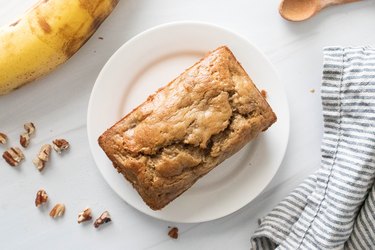
How to Make Gluten-Free Dough
Gluten is a protein found in wheat flour. It is what makes traditional bread dough chewy and allows it to rise. For those who cannot tolerate gluten, a substitute is needed. When making any gluten-free recipe, always verify on all of the ingredients used that they are gluten-free. This recipe requires many ingredients, but some brands are processed in factories that also process wheat and might contain gluten in them. When making gluten-free dough, keep all of your cooking utensils separate from those your family uses for baking with wheat flour. This can prevent cross contamination of allergens. This is a recipe only for gluten-free dough. See the Tips section for information on how to use this dough. Does this Spark an idea?
Things You'll Need
- 1 package active dry yeast
- 1 1/2 tbsp. granulated white sugar
- 3/4 tsp. salt
- 2 1/2 tsp. Xanthan gum
- 3/4 cup garbanzo bean flour (also known as chickpea flour)
- 1 1/4 cup rice flour
- 5 tbsp. potato starch
- 3 tsp. gluten-free egg replacement product (such as Ener-G foods brand)
- 1 3/4 cups room temperature water
- 1 1/2 tbsp. vegetable oil
- 3/4 tsp. white vinegar
- Two mixing bowls
- Mixing spoon
- Stand or mixer with dough hook (optional)
- Food processor (optional)
- Parchment paper
- 8" x 4" loaf pan, baking sheet, or muffin tins for baking
- Oven
Instructions
-
-
1
In one bowl combine the 3 tsp. of gluten-free egg replacer with 1/4 cup water.
-
2
To the egg replacer, add 1 1/2 tbsp. of vegetable oil, 3/4 tsp. vinegar, and the remaining 1 1/2 cups room temperature water. Mix thoroughly.
-
-
3
In a second bowl, stir in the package of active dry yeast, 1 1/2 tbsp. granulated white sugar, 3/4 tsp. salt, 2 1/2 tsp. Xanthan gum, 3/4 cup garbanzo bean flour, 1 1/4 cup rice flour and 5 tbsp. potato starch until completely combined.
-
4
While stirring, pour the wet ingredients into the dry. Stir for five minutes, use a dough hook on a mixer to mix for five minutes on low speed, or process for one minute in a food processor. The goal is to incorporate more air into the dough to make the finished product lighter in texture, whether you will make bread, rolls or buns.
-
5
Let the dough rest and rise, covered for one hour in a warm place.
-
6
Preheat the oven to 400 degrees F, and line the baking sheet, muffin tins or loaf pan with parchment paper.
-
7
Shape the dough into the desired shape. If you are making rolls, place them in the wells of the muffin tin. To make hamburger buns or hot dog buns, shape into 3-inch rounds or 5-inch long sticks and place on a baking sheet.
-
8
Bake a loaf of bread for 30 minutes at 400 degrees F before removing from the pan and completing the baking on the baking sheet for the last 25 minutes. For rolls, bake for seven minutes, then remove from the muffin tins to the baking pan and finish baking for another seven to 10 minutes. For hamburger buns and hot dog rolls, bake for a total time of 20 to 30 minutes. All finished products should be browned and sound hollow if tapped on the bottom. See the Tips section for more information.
-
1
Tips & Warnings
This dough will not form an elastic dough ball without gluten, and it is more likely to stick to your hands. When you knead this dough, cover your hands in cooking spray or oil to prevent the dough from sticking. Line the baking pan, loaf pan, or muffin tin with parchment paper to prevent the loaf from sticking to the pan. The extra moisture in the dough will make your bread soggy in the oven. To prevent this, bake your shaped dough in a pan until it has set its shape. Remove from the pan and finish cooking the bread, buns or rolls, on a baking sheet to let the oven air reach all sides of the bread and draw out excess moisture. The bread will be fully cooked when it sounds hollow when tapped on the bottom. The baking time will be dependent upon the size and shape of your dough. You should cook the bread at 400 degrees F no matter what the shape.