How to Make Bridal Veils
It's easy to see why a bride (and her mom) can succumb so easily to wedding fever: One glance at that Vera Wang gown or a visit to a potential reception venue that offers live swans floating around an indoor pool can be all it takes to obliterate a not-to-exceed budget. Happily, today's engaged couple is comfortable choosing more modest nuptials. Do-it-yourself originality is replacing mega-splurges related to everything from champagne to flowers. One popular and cost-saving measure a bride can take is to fashion her own veil. Even a sewing novice can make one in a matter of hours. Does this Spark an idea?
Things You'll Need
- Tulle or netting
- Sewing machine
- Needle and thread
- White or clear hair comb, 4 inches wide
- Tiny silk flowers with pearl embellishments (optional)
- Individual seed pearls (optional)
- Pattern (optional)
- Satin bias tape or ribbon (optional)
Instructions
-
-
1
Determine the type and length of veil you plan to wear by assessing your gown. Lavish layers of lace and beads are good matches for floor- or cathedral-length veils (62 to 72 inches; 108 inches or more), while simple but formal bridal couture works beautifully with finger-length or waist-length styles (30 to 40 inches). Finally, if you're looking for the most effortless look, consider a shoulder-length or blush-length veil that measures 18 to 24 inches long.
-
2
Eliminate stress by purchasing an inexpensive veil pattern. Vogue, Burda, Butterick, McCalls and Simplicity make templates that save time and offer additional tips for constructing and embellishing veils. If you're a creative soul, you won't have difficulty following these pattern-free instructions, but don't be shy about calling in a friend or relative for reassurance.
-
-
3
Visit a fabric shop or browse the Internet to shop for tulle or netting. The advantage of an in-person visit: You can compare a swatch of gown material to a variety of white tulle shades to make certain the two don't clash. Compare bolts of veiling. Choose the one that feels the softest to the touch (another reason to do this task in person), once you've eliminated bad color matches. Purchase 1 yard more than you need, to be on the safe side.
-
4
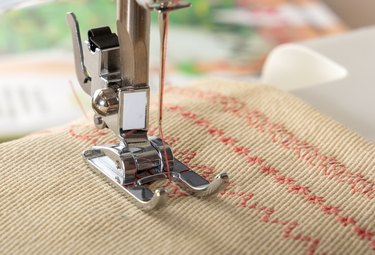
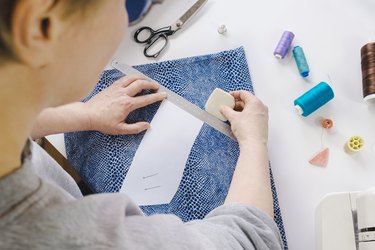
To craft a veil without a pattern, use a sewing machine or hand sew two parallel running stitches the length of the tulle that will be attached to your comb. Hold the thread taught at one end, then push the tulle toward one end to create gathers. Adjust the gathers to approximately 4 inches to match the comb, and then attach the two using needle and thread.
-
5
Glue or tack embellishments to the top of the veil using fabric glue or needle and thread. Use an overlapping or cross stitch to fasten trim, ribbons, flowers or other notions to secure the trim tightly to the comb.
-
6
Choose from these popular ways to finish the hem: A) Stitch wide strips of satin bias tape around all exposed edges. B) Create a rolled edge by folding edges in about 1/2 inch before tacking them down with a zigzag stitch. C) Create the illusion of a ruffled edge by stretching the tulle between your fingers as you hem the veil. D) Sew thin decorative ribbon or braiding around the hem. E) Use lace edging for an exotic touch. F) You can leave the edges raw.
-
7
Go the extra mile if you have the time and need some pre-wedding therapy for bridal jitters. Scatter seed pearls across the expanse of the veil, using glue or needle and thread. Rather than a comb, attach the veil to a circlet of silk flowers and wear it like a crown. Substitute a headband for the comb to spread the weight of the veil across your head. Try whatever strikes your fancy. You can afford to take risks. If you don't like the results, just trim off the top and start from scratch.
-
1
- Photo Credit Jupiterimages/Photos.com/Getty Images