eHow launches Android app: Get the best of eHow on the go.

click here
How To

How to Refinish Pine Floors

Member
By Sandra Mireles
User-Submitted Article
(22 Ratings)
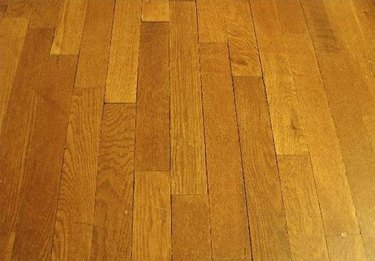
Finished Pine Floor
Finished Pine Floor
Creative Commons Yahoo, Creative Commons Google

Refinishing wood floors is a project for a determined craft person,but is well worth the effort in beauty and money savings.

Pine is a soft wood, unlike oak flooring. Oak is much harder because of the closeness of the wood grain. When finishing or refinishing pine floors keep in mind that it is a soft material and requires a soft touch.

Difficulty: Challenging
Instructions

Things You'll Need:

  • Hammer
  • Screwdriver
  • Nails
  • Wood putty
  • Sand paper
  • Wood Stain
  • Clear wood floor finish
  • Floor belt sander
  • (Belt sander can be rented at any tool rental shop
  • Floor disc sander
  • Orbital hand sander
  • Soft pieces of cloth
  • Fine bristle paintbrush
  1. Step 1
    Belt Sander
     
    Belt Sander

    Before you start refinishing your wood floor make sure you have your tools and supplies collected and placed together conveniently. Clear the entire floor or room area of furniture and any wall decorations or hangings. Close all doors to other rooms to protect from the dust. The dust will go everywhere during the sanding process.

    Before you sand check the floor for nails or screws that protrude above the surface. Soft wood contracts and expands causing nails and screws to come up or loosen. Secure any loose planks with nails or screws and fill with quick drying wood putty.

    When planning to sand your floors try to project three to four days of good weather. With your belt sander, begin with at least a #80 grit sandpaper if you are refinishing. If the wood is new, start with a #100 grit sandpaper.

  2. Step 2
    Unfinished Flooring
     
    Unfinished Flooring

    Start sanding at one end of the room with your machines in front of you and move backwards slowly to the other end of the room. You will need to get a feel for the machine. The reason for going from one end of the room to the other is that when you do short segments your sanding streaks will show when the stain of finish is applied. When you get to the end of the room you should have about six (6) feet of floor between the machine and the wall. Turn the sander around and sand this small area. Continue working in this manner until the floor has been completely sanded. On a refinishing job check your belt sandpaper for varnish buildup on the roll.

  3. Step 3
    Sander
     
    Sander

    When the room has been completely sanded change the sanding belt to a #150 grit. Sand the room again in the same manner as before. As you will see by this time this machine does not get close to the walls and corners. You need to use a hand operated disc sander. Use the same type grit sanding disc as the belt machine. When you change grit type on the belt sander, do the same on the disc hand sander.

    REMEMBER PINE FLOORS ARE A SOFT WOOD. WHEN YOU USE THE BELT SANDER KEEP THE MACHINE MOVING!

    Finish sanding the floor for the third time with a #220 grit sandpaper until the floor is smooth. Vacuum the floor with the floor with a good shop vac to pick up dust from the cracks. Get the floor as clean as possible before you start the finishing process!

  4. Step 4
    Finished Pine Floor
     
    Finished Pine Floor

    To Stain:

    If You want to choose your wood stain color and test it on another piece of flooring to be sure about your color. Brush the stain on the floor with a brush and wipe with a cloth after 10 minutes of drying. This keeps the stain even and smooth. Do the complete room in this manner. Allow the floor to dry for 24 hours with no traffic in the room.

    Apply the first clear coat of finish with a fine bristle brush or a sheepskin applicator. After the first clear coat allow to dry for at least 24 hours. You will notice that when the finish is dry it will feel very rough. With a hand orbital sander and find grit (#220) sand the floor lightly but do not take off the stain. This will take off the roughness. DO NOT OVER SAND! Wipe with clean cloth!

    Add another clear coat in the same manner as described above. More coats of finish means a brighter shine. Always sand between coats of finish to remove the roughness of the previous coat. After the third coat of finish the sanding should be faster and the floor should be very smooth. Apply as many coats as you desire using the same steps as above.

    Allow the final WOOD SEALANT coat to dry at least 48 hours before allowing traffic on the floor.

Tips & Warnings
  • Remember to keep the sander moving at all time. If you let it get away from you it will damange the floor.
  • Move backwards across the floor when sanding. Work backwards so there will be no streaks in the finish.
  • Be sure to sand with the grain NOT ACROSS THE GRAIN!
  • Allow ample drying time between coats
  • Use quality floor finishing products
  • Do not stain in an enclosed area. All plenty of ventilation.

Comments  

| View All 22 Comments

abtex said

Flag This Comment

on 11/18/2009 A very good and informative article on How to Refinish Pine Floors. 5*

Flag This Comment

on 3/10/2009 Great job on this article! Very thorough. 5*

AmyRose said

Flag This Comment

on 3/5/2009 We have pine floors (soft, as you said), and this really gives me the big picture of what it would take to refinish them. 5*

leaper said

Flag This Comment

on 3/1/2009 Very good information, I love wood floors!

Wasatch said

Flag This Comment

on 2/28/2009 I have done this a few times and it is always worth the effort.

Subscribe

Post a Comment

Post a Comment

Related Ads

  • Have you done this? Click here to let us know.
I Did This
Get Free Home & Garden Newsletters

Copyright © 1999-2009 eHow, Inc. Use of this web site constitutes acceptance of the eHow Terms of Use and Privacy Policy .   en-US Portions of this page are modifications based on work created and shared by Google and used according to terms described in the Creative Commons 3.0 Attribution License. † requires javascript

eHow Home and Garden
eHow_eHow Home and Garden