How To

How to Clean a French Horn

Contributor
By eHow Contributing Writer
(18 Ratings)

This noble instrument deserves the best care.

Difficulty: Moderately Easy
Instructions

Things You'll Need:

    Dismantle the Instrument

  1. Step 1

    Place a large clean towel on a table in your work area.

  2. Step 2

    Extract the valve slides from the rotary casement.

  3. Step 3

    Apply two or three drops of penetrating oil to loosen these slides if they are dry of lubricant and resist removal. Avoid excessive force.

  4. Step 4

    Avoid removal of the rotary valves inside the casements. Much specialized training is needed to re-string the small interior cords with exactitude.

  5. Step 5

    Extract the major tuning slide nearest the bell the way you removed the valve slides. (There may be two if you have a double French horn.)

  6. Immerse, Flush and Re-oil

  7. Step 1

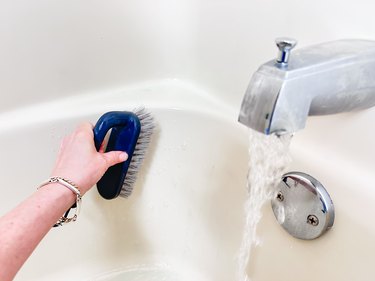
    Place a large bath towel on the bottom of a bathtub filled with 8 to 10 inches of lukewarm water.

  8. Step 2

    Add 1/2 to 1 full cup of mild soap.

  9. Step 3

    Immerse the body of the French horn and the loose tuning pipes in this solution.

  10. Step 4

    Turn the instrument several times to ensure that all tubing has water penetration.

  11. Step 5

    Allow the horn to soak for a minimum of 4 hours and as long as overnight.

  12. Step 6

    Remove and take the tubing to an outdoor location.

  13. Step 7

    Fit a garden hose with a spray-gun valve.

  14. Step 8

    Wrap a towel around the end of the hose. Place the hose-gun covered with the towel into the bell of the horn.

  15. Step 9

    Flush out the buildup on the inside of the tubing with a strong stream of water.

  16. Step 10

    Repeat this procedure with each section of tubing.

  17. Step 11

    Use a "snake" cable with a small brush on the end to loosen rebellious dirt. Flush again.

  18. Step 12

    Carefully rinse, dry and re-oil all parts. Blow the water out of all tubing.

  19. Step 13

    Reassemble the instrument using a very slight bit of Vaseline on the slides to facilitate ease of movement when making exact tuning adjustments.

  20. Step 14

    Dry the external metal so the lacquer finish is bright and clean.

  21. Step 15

    Demonstrate your skill by playing a Wagnerian theme. How about the "Ride of the Valkyries"?

Tips & Warnings
  • Some players use a chamois cloth on their laps or inside the French horn bell. This protects clothing from oil and moisture.
  • The lacquer on the inside of the bell of the French horn protects the instrument from deterioration caused by hand perspiration.
  • Avoid the use of force during assembly or disassembly.

Comments  

Sq3r said

Flag This Comment

on 11/2/2007 Bad advice.

Anonymous

Anonymous said

Flag This Comment

on 8/8/2006 Don't use Vaseline or any hardware products on your horn! Machinists do so because it is cheap to buy, it will last until someone buys the horn. There are so many greases and oils that are specially made to work with your horn! My personal favorite is Hetman, it's by far better than everything else I've tried. Also, please don't take apart the rotors yourself because it is a very delicate process. Allow a professional to do that. Finally, consider having a professional giving your horn a chemical bath once a year. Not only will it get a good cleaning, but a pro will be able to realize if there is something wrong with it that you haven't noticed.

Anonymous

Anonymous said

Flag This Comment

on 6/30/2006 Make sure that when you take the slides out, you put them out in an order that you remember. You might think that you will know exactly where they go, but it is harder than you think. The slides look very similar and is very bad if they get mixed up. It could damage the French horn!

Anonymous

Anonymous said

Flag This Comment

on 11/22/2005 I do not ever use soap to clean musical instruments. There are just too many soaps that could potentially damage the inner workings. Water and a snake should do the trick.

Also, if you regularly clean the lead pipe (the part that leads away from the mouthpiece), more substantial cleaning can be less frequent.

Anonymous

Anonymous said

Flag This Comment

on 11/22/2005 Make sure all the spit is out of the horn before you put it in the water.

Post a Comment

Post a Comment

Have you done this? Click here to let us know.

I Did This

Related Ads

Copyright © 1999-2009 eHow, Inc. Use of this web site constitutes acceptance of the eHow Terms of Use and Privacy Policy.   en-US

Demand Media
eHow_eHow Arts and Entertainment