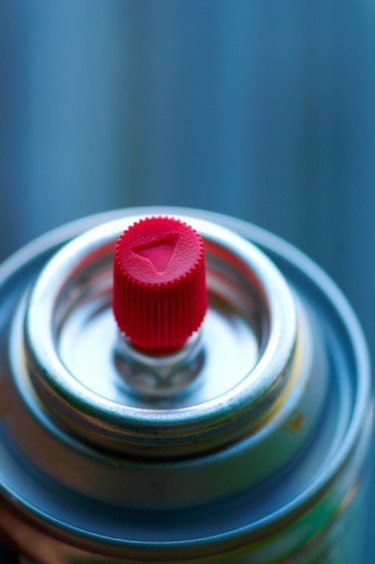
How to spray paint vinyl or simulated leather

How to spray paint vinyl or simulated leather thumbnail
spray paint vinyl or simulated leather

Believe it or not, there will be times in your life when you will have the need to restore faded vinyl color. This is common for boat seats, vehicle dashboards and upholstery. You could always go the route of re-upholstering the Vinyl, but I have done both and I prefer to just repaint it as long as the vinyl is in good structural shape and does not have any holes or tears. Here is how you restore Vinyl by painting it.

Things You'll Need

  • Rust-Oleum Specialty Vinyl Spray Paint or DupliColor Vinyl Sray Paint
  • Good quality faded vinyl boat seat, vehicle dashboard, or upholstery
  • Painter's drop-cloth
  • Blue Painter's Tape
  • 5 gallon bucket
  • mild detergent
  • sponge
  • lint-free towel
  • tack-cloth
Show More

Instructions

    • 1

      The first step is to remove the Vinyl or simulated leather seat, dashboard, furniture, luggage, car door panel, vinyl car top, floor mats or other vinyl object to be restored from the vehicle, boat, home or whatever it is attached to. You do not want to actually remove the Vinyl itself, but the whole object it is attached to.

    • 2

      The next step is to remove any additional items from the object to be painted that you do not want to paint, such as switches, trim, knobs, screws, metal pieces, etc. If you do not have anything attached to your vinyl object to be painted, move on to the next step.

    • 3

      You want to place your vinyl or simulated leather object to be
      re-painted and restored in a well-ventilated, dust-free area such as an open garage or workshop. It is recommended to place the object on top of a painters drop cloth, and to drape the drop cloth over anything that you do not want to be painted in order to catch an over-spray.

    • 4

      Now that you have you object set up in your painting studio or shop, you have removed the items from your vinyl object that you did not want to paint, such as metal trim, knobs, switches, etc - we need to clean all of the vinyl or simulated surfaces. Take some mild detergent and mix up a solution of 3/4 cup of soap to 4 parts water in your 5 gallon bucket. Take your sponge and thoroughly clean all of the surface area that you will be painting.

    • 5

      Rinse all of the soap residue off of your vinyl or simulated object to paint and let it dry. Use a dry, lint-free towel to help remove any excess water.

    • 6

      Allow the object to be painted to dry for at least 2-3 hours.

    • 7

      Now we want to take our blue painter' s tape and tape over anything that we do not want to get painted and which you could not remove in Step 2, such as metal framing, wires, etc. If you are painting a seat, you can tape over the metal parts or electronic switch housing, if you are painting a car door, you can tape over the door handles, etc. Careful preparation is key to keeping the paint where you want it, and this step should not be rushed. Take your time!

    • 8

      NOW WE ARE READY TO PAINT! This is where we will take our Rust-Oleum Vinyl spray paint and tack-cloth, and get ready to get down to business. I recommend the Rust-Oleum Vinyl spray paint because it actually contains vinyl in the paint to allow for the best adhesion and for maximum flexibility of the paint on the object. It will not crack, tear, or flake off when applied correctly to a clean dry surface. DupliColor is also another great choice to use!

    • 9

      Gently dust over your object to be painted to with your tack-cloth to remove any small dust particles. Be sure to only paint in temperatures between 50 degrees Fahrenheit and 90 degrees Fahrenheit with a humidity below 85% to ensure proper drying. Do not paint in windy, dusty conditions either, as it will screw up your paint job and include particles of dust, grass, insects, etc. into your final coat.

    • 10

      Shake the can vigorously for about a minute to get the marble inside to rattle (hence the term rattle-can painting). Hold the can 10-12" from the surface of the object and spray on a THIN first coat in a steady back-and-forth motion. You want to slightly overlap each stroke, and always keep your can the same distance from the object throughout the entire application of paint. You want to keep the first layer thin, almost transparent so that there are NO DRIPS and NO RUNS. If you get drips or runs, clean the nozzle tip, move further away from the object you are painting, and immediately wipe the drips and runs off with your towel.

    • 11

      After you have applied a nice, thin, almost transparent base coat, and allowed at least 15-30 minutes of time to dry. Go ahead and apply at least 3-5 more light coats until you can no longer see the original faded color, and you have a nice clean uniform new color. Remember to keep each coat light so that it will dry faster, and so that it does not drip or run.

    • 12

      Once you are finished painting your vinyl or simulated leather object, and you have allowed enough time for it to dry, turn your paint can upside down and spray it for 3 seconds to clean the nozzles. You can also use mineral spirits to wipe it off or any over-spray that you may have left on metal pieces, etc.

    • 13

      Now that you are done, we want to add a nice even coat or vinyl or simulated leather protection to the object you just painted. This will help to prevent fading and wear and tear. Use Armor-All protective wipes or spray.

    • 14

      Re-install your vinyl or simulated leather seat, dashboard, door-panel, whatever - and admire your handi-work.

Tips & Warnings

  • TRY TO KEEP EACH LAYER OF PAINT THIN, CLEAN, AND DRY. WE DO NOT WANT LAYERS OF PAINT TO LOOK WET.

  • ALLOW AT LEAST 15-30 minutes of drying time in between coats

  • Keep the can moving while spraying

  • Spray on a very think coat at first. To achieve this, move the can back and forth faster the first time you spray on the paint, and keep the can farther away from the object. This helps get a nice dry layer of paint down for the next layers to adhere to

  • Apply a vinyl or simulated leather protector once you are done painting

Related Searches:

Comments

You May Also Like

  • About Vinyl Spray Paint

    Wear and tear over time can cause the original luster of that shiny vinyl surface used everyday to fade. Restoration is possible...

  • Can You Spray Paint Leather?

    Vinyl and plastic items can easily be painted using regular spray paints and primers noted for use on these surfaces. Leather, on...

  • How to Paint Upholstery

    Painting upholstery is an inexpensive way to update a piece of furniture quickly. As of 2009, there are two methods used to...

  • How to Restore Vinyl Boat Seats

    Vinyl boat seats take lots of abuse and eventually become old, worn and weathered. Sometimes, all that is needed to bring them...

  • How to Remove Spray Paint From Vinyl

    Spray paint is easy to use on a variety of surfaces. However, it also can be easily sprayed on surfaces that you...

  • How to Remove Spray Paint From Vinyl Siding

    Whether it was a mistake or an act of vandalism, it's time to get that spray paint off of your home's vinyl...

  • How to Remove Spray Paint from Leather

    Spray painting your kitchen chairs in your leather pants didn't seem like such a bad idea at the time. Well, no matter...

  • How to Paint Vinyl Seats

    Brighten up your old or dingy vinyl seats by working with the same products professional car restoration companies do. Vinyl cleansers, primers...

  • How to Paint Vinyl Fencing

    If you're looking for fencing that requires little maintenance, then vinyl fencing is for you. Vinyl fencing is durable and strongly resists...

  • How to Spray Paint Shoes

    You May Also Like. Can You Spray Paint Leather? Vinyl and plastic items can easily be painted using regular spray paints and...

  • How to Apply Paint to Soft Vinyl

    Soft vinyl can be a challenge to paint, because regular paint products will not adhere properly to the vinyl and can change...

  • How to Paint Vinyl Awnings

    Vinyl awnings are easy to care for, but over time may appear faded or dull. You can revitalize your awning's appearance by...

  • How to Paint Vinyl Seat Cushions

    Vinyl seat cushions are used in many different places, such as boats and outdoor furniture. Since the material is created to resist...

  • Can You Spray Paint Wicker Furniture?

    Using spray paint is the most effective and efficient way to paint wicker furniture. Doing so can change the look of a...

  • How to Remove Spray Paint From Skin

    Spray paint is a convenient and inexpensive way to paint just about any object. Due to it's design, it can also be...

  • How to Paint a Vinyl Floor

    If you have a home decorating budget but have an unsightly 70s vinyl floor in your kitchen, bathroom or other area of...

  • How to Color Restore a Leather Sofa

    Over time leather furniture will suffer normal wear and tear, causing it to lose its original attractive color. Instead of replacing your...

  • How to Remove Paint From Leather

    Comments. You May Also Like. How to Remove Spray Paint from Leather. Spray painting your kitchen chairs in your leather pants didn't...

  • Can You Spray-Paint Patio Cushions?

    Yes, you most certainly can spray-paint patio cushions. Changing the color of cushions is an excellent way to alter furniture décor cheaply....

  • How to Paint Upholstered Vinyl

    Vinyl upholstery does not like "regular" paint and will peel, crack, and chip if the correct products are not used to change...

Related Ads

Featured