How to Sew Stretch Fabric

Lots of great fabrics have some stretch to them, including t-shirt knits, fleece and even stretch velvet. These fabrics can be fun and easy to work with. They generally don’t ravel, making them great for projects you don’t want to hem and for garments with non-raveling seam allowances. You do, however, have to cut and sew stretch fabrics carefully to prevent them from getting stretched out of shape.

Things You'll Need

  • Stretch Fabric
  • Matching Thread
  • Scissors
  • Straight Pins
  • Sewing Machine
Show More

Instructions

  1. Sewing Stretch Fabric

    • 1

      Cut the pattern pieces in the same direction, especially if the fabric stretches more in one direction than the other. In most cases, the fabric will stretch more from side to side than from top to bottom.

    • 2

      Place the fabric pieces right sides together. Some fabrics, like stretch velvet, have very obvious right and wrong sides since one side is fuzzy and the other side is smooth or glossy, while other fabrics may only have a subtle difference in color or shine. Some stretch fabrics, such as polar fleece, don’t have a right and wrong side. For these fabrics, it doesn’t really matter which sides you use.

    • 3

      Pin the fabric pieces together, making sure both pieces of fabric stay flat and not stretched in any way.

    • 4

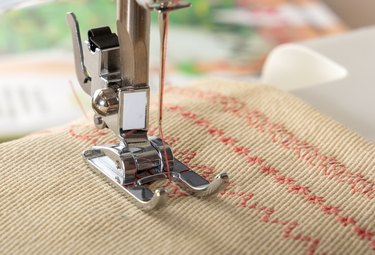
      Set the sewing machine to a normal stitch length. Straight stitches generally work best for stretchy fabrics. If you need to use a decorative stitch, you may want to baste the fabric together using a long, straight stitch first. Then do the decorative stitching next to the basting and remove the basting with a seam ripper.

    • 5

      Set the sewing machine to a slow stitch speed, if it has a speed control. This will make it easier to feed the stretch fabric evenly through the machine, without pulling it out of shape.

    • 6

      Sew the fabric pieces together, taking care to guide the fabric gently through the sewing machine’s feed dogs. Do not push or pull the fabric through.

Tips & Warnings

  • After working with fuzzy stretch fabrics, such as fleece or velvet, you may want to brush the fuzz out of your sewing machine, since these fabrics can create a lot of lint buildup. Remove the bobbin cover and the bobbin. Use the small brush that came with your machine (or one purchased at a fabric store) to gently remove the lint from the bobbin area. You may also need to brush out the thread guides and the area around the light bulb.

  • Turn the sewing machine off before brushing lint from the light bulb area, since it will be hot. Use caution when working with sewing machines, scissors and pins.

Related Searches:

Comments

You May Also Like

  • How to Stretch Stitch With a Sewing Machine

    You should use a stretch stitch when constructing garments out of stretchy fabrics, such as nylon or polyester. This will enable the...

  • How to Sew a Swimsuit

    Although swimsuits don’t use very much fabric, they’re one of the more challenging clothing items to sew, since they require stretchy fabric...

  • Tips for Sewing Stretch Material

    Comments. You May Also Like. How to Sew a Stretch Material. Sewing with stretch material enables easy construction of attractive clothing because...

  • How to Sew a Stretch Material

    Sewing with stretch material enables easy construction of attractive clothing because stretch fabric has a sturdy weight and maintains its shape. Clothing...

  • How to Sew on Stretch Satin Fabric

    Stretch satin can be difficult to sew, but works well for many projects. It poses the challenges typically associated with sewing satin,...

  • Tips on Sewing Satin Fabric

    Tips on Sewing Satin Fabric. Weddings, graduation, proms and formal dinners often include special dresses. Each season as designers introduce trendy gown...

  • How to Measure Fabric to Cover Cushions

    Covering existing cushions is an effective way to freshen up your décor and give cushions a new look. You can also extend...

  • Sewing Apron Straps

    To make apron straps you can just rip strips of material and sew them into straps. Learn more about how to sew...

  • How to Sew on Stretch Satin Fabric

    Most sports bras and some dresses are made with stretch satin fabric. Assemble satin projects of your own with help from a...

  • Tips on Sewing With Swimwear Fabric

    Tips on Sewing With Swimwear Fabric. Making your own custom bathing suit will ensure that you get the proper fit to suit...

  • How to Sew a Stretch Stitch

    When you create a garment using stretchy material, you will need to use a stretch stitch to allow stretch along the seam...

  • How to Sew Stretch Material to Cotton

    Combining stretch fabric and woven cotton adds texture and improves the fit of some garments. However, runs in stretch fabric and stitch...

  • How to Sew on Stretch Knits

    You can make a new stretch knit garment or you can repair a damaged garment. Stretch knits can be challenging to sew...

  • How to Sew a Hem in Spandex Fabric

    When you sew with spandex, you face the challenge of working with fabric that has a two-way stretch, both lengthwise and crosswise...

  • How to Sew Fabrics With Four-Way Stretch

    For tight-fitting clothes such as exercise and swimwear, the four way stretch helps you keep fabrics together. Sew up swimwear and other...

  • How to Sew Lycra Fabric

    Lycra is DuPont's trade name for spandex, a stretchable, synthetic fiber. Lycra fabric is available in either two-way or four-way stretch and...

  • How to Use a Knit-Only Sewing Pattern on Non-Knit Fabric

    Knit-only patterns --- patterns designed only for stretchy fabrics --- are typically fashioned to take advantage of the "stretchy" factor. For example,...

  • How to Sew Lace Fabric

    Lace is created by twisting, braiding or looping thread together, without any backing fabric, to create a unique design. Modern lace is...

  • Sewing Hints for Polyester Fabrics

    Polyester is a widely used synthetic fabric. Because it's a plastic compound made from petroleum byproducts, polyester melts and may fuse when...

Related Ads

Featured