How to Sew a Curved Hem

Curved hems can be a little more difficult to make than straight hems, since you have to fold in the excess fabric. For slightly curved hems, such as those at the bottom of many skirts, you can use the same techniques as you would for a straight hem and just make the hem narrow (about 1/4 to 1/2 inch). For heavily curved hems, like those on the lower edge of rounded pockets or appliqués, you can make the hemming easier by clipping the fabric around the curve. Unlike straight hems, which use two folds to encase the raw edge of the fabric, curved hems only use one fold, so you may want to use a zigzag or decorative stitch when you sew the hem to help keep the edge from raveling. Here are steps.

Things You'll Need

  • Garment or fabric
  • Matching thread
  • Scissors
  • Measuring tape
  • Straight pins (optional)
  • Iron
  • Sewing machine or hand sewing needle
Show More

Instructions

    • 1

      Place the fabric right side down.

    • 2

      Cut small slits, about 1/4 inch deep and 1 inch apart, in the curved edge of the fabric. These slits will help the curved edge of the fabric lie flat when you fold it.

    • 3

      Fold the edge of the fabric over 3/8 to 1/2 inch toward the wrong side. Make sure the width of the fold is consistent for the entire hem.

    • 4

      Pin the fold if needed to hold it in place.

    • 5

      Press the fabric along the fold (removing any pins just before you iron that section). You may want to use steam as you press firmly to hold the fabric in place.

    • 6

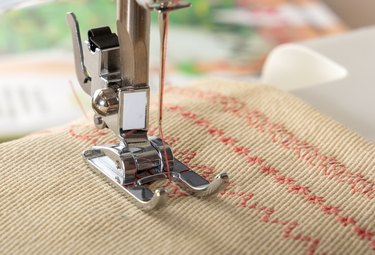
      To sew the hem by machine, stitch along the folded fabric, about 1/4 inch from the top edge. You can use a straight stitch, but you may want to use a decorative or zigzag stitch to help keep the edges of the fabric from raveling.

    • 7

      To sew the hem by hand, thread the needle and tie a knot in the end of the thread. Whip-stitch the top edge of the fold to the fabric, taking care to poke the needle through only the tiniest amount of outside fabric to prevent the stitches from showing.

Tips & Warnings

  • If you don’t have a steam iron, you can put water in a plastic spray bottle and mist the fabric before you iron it.

  • For curved appliqués and pockets, you may want to skip sewing the hem and just press it. You can sew the hem in place when you sew the appliqué or pocket to the fabric.

  • Use caution when working with irons, scissors, sewing needles and sewing machines.

Related Searches:

Comments

  • Mitzi Saltsman May 29, 2009
    Very well done. Taking the little extra time to clip the hem make a much better finished product. Thanks.

You May Also Like

  • How to Sew a Curved Hem

    To sew a curved hem, cut tiny slits into the curve of the fabric to avoid bunching or sew a loose seam...

  • How to Sew a Straight Edge to a Curved Edge

    Sewing a straight edge to a curved edge is a common practice for seamstresses and tailors, who use the technique to attach...

  • How to Sew a Curve Seam

    When you learn to sew, it's a good idea to practice the fundamental stitches and seams before you start your first project....

  • How to Hem a Round Tablecloth

    Giving a round tablecloth a nice finish to the hem is fairly simple, and the process can be done either by hand...

  • How to Sew a Hem

    Hems keep the edge of the fabric from raveling, and make the garment or project look nice. To make a hem, you’ll...

  • How to Make Rounded Edges in Photoshop

    Photoshop is an amazing program with a broad array of tools to help you to accomplish any graphics task. It can alter...

  • Tips for Hemming Curves

    It is difficult to iron up one fold on a curved edge. It is more difficult to iron up two. Making two...

  • How to Hem a Tablecloth

    Tablecloths are frequently included in kitchen and dining room decor, as they add style to table settings while protecting table surfaces. Sometimes,...

  • How to Use a Rolled Hem Foot in Sewing

    Rolled hems, also known as narrow hems, provide a tight, professional-looking edge to even the sheerest of fabrics. This hem is achieved...

  • How to Sew a Knife Edge

    The term "knife-edge seam" is typically used when constructing a pillow. In fact, a knife-edge seam is the same basic and versatile...

  • About Hemming

    Hemming finishes the edges of a piece of fabric for use in clothing or the home. There are a number of possible...

  • How to Make a Perfect Curved Edge around a Tree

    You want a perfect circle flowerbed around a tree. Preparation is the key as hacking into the yard unprepared will typically give...

  • How to Sew a Round Tablecloth

    Tablecloths can be designed for any type of holiday or event, or simply to suit your taste in furniture and home decor....

  • How to Use a Rolled Hem Foot on My Sewing Machine

    A rolled hem foot for a sewing machine produces a much narrower hem than does sewing a rolled hem by hand. The...

  • How to Use Excel to Create a Bell Curve

    Most of us have heard our teachers talk about "grading on a curve." The curve they use is a simple version of...

  • How to Use a French Curve for Sewing

    The French curve, or designer’s curve, can be used to customize commercial garment patterns, which are based on standardized sizes intended to...

Related Ads

Featured