How to Make a Better Cup of Coffee
If you're a coffee lover, you can take several simple steps to improve your coffee experience without spending a lot of money. In fact, your java can taste better than anything you buy at your local (and expensive) "grande-venti" coffee shop, and cost you far less money. Does this Spark an idea?
Things You'll Need
- Fresh roasted coffee beans
- Coffee grinder
- Hand-press coffeemaker
- Bottled water (optional)
- Measuring spoons
Instructions
-
Use Only Fresh Roasted Beans
-
1
Purchase only fresh roasted coffee. Look for small coffeehouses in your area that roast their own coffee. You'll be able to purchase smaller batches of coffee roasted that day.
-
2
Purchase fresh roasted beans on the Internet, if you don't have good coffee shops near you. Many online coffee houses will immediately ship you coffee beans that were roasted the day you ordered them, and are available in many types of roasts and flavors. In comparison, coffee beans sold in chain groceries and chain coffee shops may be more than three weeks old when they arrive.
-
-
3
Understand that coffee ordered from online coffeehouses costs, with shipping, about $12 to $15 a pound at the time of publication. This is about the same as you would pay in one of those chain stores.
Grind the Beans at Home
-
4
Avoid purchasing already-ground coffee because ground coffee loses most of its flavor about 20 minutes after it has been ground. That's a huge sacrifice on taste, just because you don't want to bother with grinding.
-
5
Purchase a good coffee grinder -- or even a mediocre one. This is the one piece of equipment you should consider carefully because good grinders are an investment in good-tasting coffee. Prices range from as low as $20 for blade grinders to up to $200 for the best burr grinders. Burr grinders are preferable because they grind coffee more uniformly than blade versions. But even a blade grinder is a vast improvement over purchasing stale, already-ground coffee in a can.
-
6
Hold off grinding your coffee until your water has come to a boil. Timing the grind this way can mean a huge difference in the taste because the coffee oils and aromatics won't have time to dissipate into the air.
Buy an Inexpensive Coffeemaker
-
7
Throw out your electric coffeemaker with the water reservoir and the basket for coffee grinds.
-
8
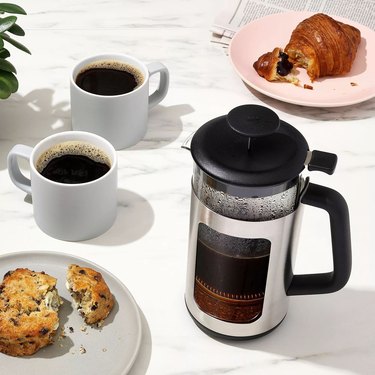
Replace your old machine with a simple hand-press coffeemaker or a small, one-cup-at-a time coffeemaker.
-
9
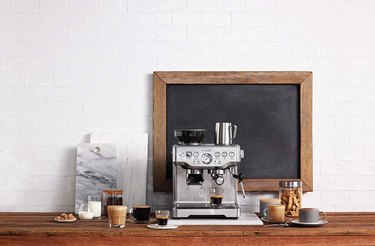
Consider that high-end electric drip coffee makers can make a good cup of coffee, but are more expensive than hand-press coffeemakers. If you're someone who must awake to a cup of coffee made using a timer, by all means spend the money.
Use Clean Water and Good Measurements
-
10
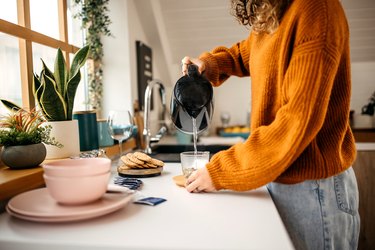
Use water that is as clean as possible. Some coffee fanatics use bottled water to make their coffee, and others either purchase a counter-top water purifier or install a simple faucet filter. Boil your water in a clean teapot -- avoid heating it in a microwave.
-
11
Be as precise as possible with your measurements, but remember that making good coffee arises from trial and error. In addition, measurements vary depending on the coffeemaker and the drinker's personal tastes.
-
12
Know that, as a general rule, if you're using a drip machine, use 1 tablespoon of ground coffee for every 8 ounces of water. If you're using a hand-press or French press, measure 1 tablespoon of coffee to 4 ounces of water.
-
1
Tips & Warnings
Regularly wash your coffeemaker, no matter what kind it is. If you have a coffee machine, use one of many coffeemaker products that are run through a cycle to clean the interior or the machine.
Experiment with different coffee roasts. Once you're a coffee aficionado, try all kinds of roasts, from dark to mellow, and order coffee from different parts of the world.
Don't reheat coffee. There's no such thing as leftover coffee.
References
- Photo Credit Photos.com/Photos.com/Getty Images