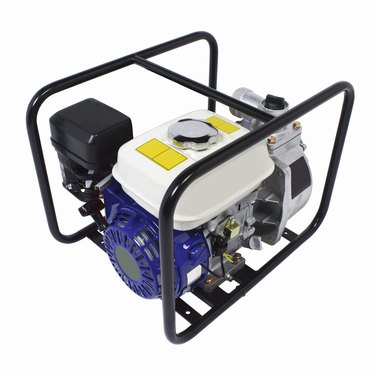
A portable home generator can be a big help when the electricity goes out. Most portable generators are not large enough to power everything in your house, but they can supply a few critical appliances, such as a refrigerator and lights. Always follow the manufacturer's instructions when maintaining, fueling and operating a portable generator.
Step 1
Determine the amount of power that is needed for each item you would like to plug into the generator during an outage. Compare that to the wattage that the generator can produce. Do not overload the generator by plugging in more than the generator can handle.
Video of the Day
Step 2
Place the generator outside in an open area away from windows, door and vents. Never use a generator inside a house or a closed garage. Generators produce carbon monoxide. If used in an enclosed area, they can cause carbon monoxide poisoning.
Step 3
Keep the generator dry by setting it on dry ground or a suitable surface, such as a concrete pad. If it's raining or snowing outside, protect the generator with an overhead open canopy.
Step 4
Make sure the generator motor is cool. Check the oil and fuel supply, and add oil or gas as needed. Do not refuel the generator when the engine is hot, as this creates a fire or explosion hazard. Make sure any appliances plugged into the generator are turned off. Start the generator as directed by the manufacturer.
Step 5
Use a heavy-duty, grounded outdoor extension cord for plugging appliances and other items into the generator. You may be able to plug some devices directly into the generator, but since the generator has to be kept outside this is often impractical or impossible.
Tip
Store the fuel for your generator in a tightly closed container outside of your home in a secure area. There could be state and town laws governing the use and storage of generator fuel. Check with your local fire department for information.
Warning
Never connect a generator to a home's electrical system. This creates a potentially deadly situation that endangers utility workers or any neighbors whose homes are on the same transformer.
Video of the Day