How to Arrange a Bedroom With a Lot of Windows
Bedrooms are private sanctuaries where you can leave the cares of the day behind. A bedroom needs to provide cozy comfort mixed with efficient function and tasteful decor. Floor space and architectural design are major factors in determining the best layout for your bedroom. Abundant windows can create the illusion of a larger room, directing eyes to the world outside. However, bedroom windows can be frustrating when arranging furniture. Knowing how to effectively incorporate windows into your space planning can result in a stress-free furniture layout. Does this Spark an idea?
Instructions
-
-
1
Remove furniture, accessories, wall hangings and window treatments from your bedroom to provide a clean slate to work with.
-
2
Measure each wall of your bedroom with a tape measure and sketch the measurements onto a piece of graph paper to create an outline of available floor space. Use a 1/4 to 1 scale, which means that every 1/4-inch square on the graph paper is equal to 1 foot of the actual room. Measure the windows, doors and fireplaces, and include them in your sketch. Also, note on your drawing where electrical outlets and floor vents are located.
-
-
3
Decide how you would like to use your bedroom, other than sleeping. For example, you might want an area for reading, working, watching television or conversing.
-
4
Measure the width, depth and height of furniture pieces you want to keep in your bedroom, as well as any additional pieces you would like to incorporate. Draw each measurement on a clean piece of graph paper, using the 1/4 to 1 scale. Cut out each furniture piece and use a pencil to label each.
-
5
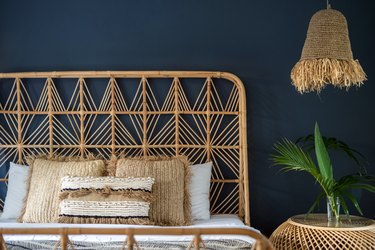
Place the paper cutout of the bed on the longest wall, with or without windows, of your room sketch, with the head of the bed butted a few inches away from the wall or windows. Position nightstands on either side of the bed. Place your chest of drawers and dresser on other walls. Bay windows make an ideal sitting or reading area with two chairs and an accent table in between. A desk placed against a window area provides a great view while working. Place a bench at the end of a bed for putting on socks and shoes.
-
6
Rearrange your paper furniture cutouts on your room sketch to play with different furniture layouts without the work of moving furniture. Use interior design guidelines to create a functional room. Allow a minimum of 3 feet between furniture and a closet. There should be a minimum 2-foot clearance around the bed. Allow at least 2 feet, 6 inches, in front of drawers. Space between a bed and desk or dressing table should be a minimum of 4 to 5 feet.
-
7
Hang drapes or blinds on windows to add color, texture and privacy. Large, open windows are stunning, but bright sunlight may become an obstacle to a good night's sleep. Arrange the rest of the room with a few coordinating accessories. An area rug on wood or tile floors adds cozy warmth and a favorite piece of artwork gives color and visual interest to a wall. Potted greenery or a vase of fresh flowers imparts energy and life to a bedroom.
-
1
Tips & Warnings
Stick with interior design space guidelines to create a functional, aesthetically pleasing environment. Avoid cramming more furniture pieces into your bedroom just because you like them. Find them a new home in another room of your house.
References
- House Beautiful: Beautiful Designer Bedrooms
- The Creative Home: Home Decorating: Step By Step
- Country Living: Bedroom Designs
- Reference Guide 3: Fabrics, Furniture Layout Guidelines; Sheffield School of Interior Design
- Photo Credit Jupiterimages/Creatas/Getty Images