Play dough is a favorite with kids and parents alike because the squishy, sensory fun fosters creativity as well as fine motor skills. You can take the activity to the next level by making homemade modeling clay. Once the kids' creations dry they can be kept and treasured, instead of thrown away.
Video of the Day
Things You'll Need
2 1/2 cups of flour
1 cup salt
1 cup water
Bowl
Spoon
Step 1
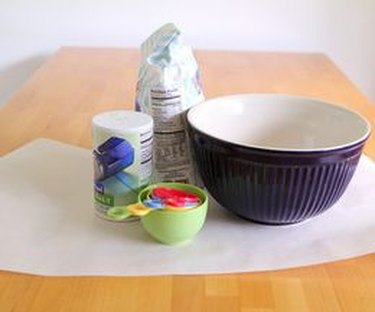
You likely already have all the ingredients for homemade modeling clay in your kitchen. All you need is water, flour, salt and food coloring. Please see the last slide for an itemized list of tools and materials.
Video of the Day
Step 2
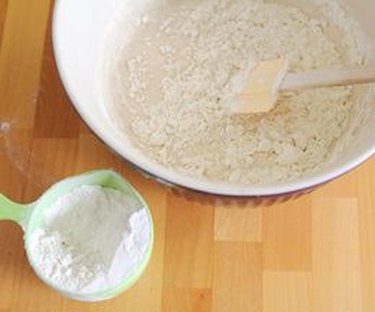
Mix the flour, salt and water in a bowl. Continue stirring until the mixture forms a ball.
Step 3
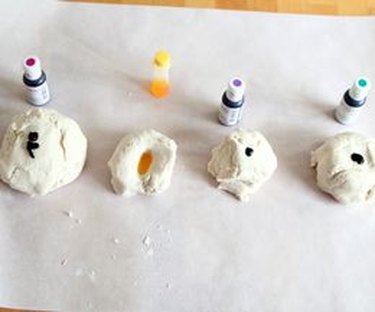
Divide the dough into sections and add a few drops of food coloring. Knead the dough with your hands and continue to add food coloring, a few drops at a time, until the desired color is achieved.
Step 4
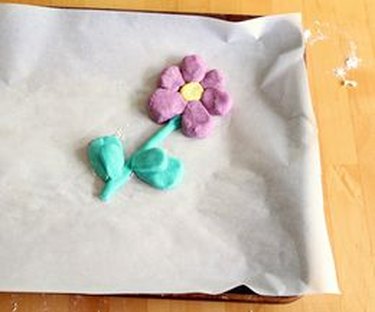
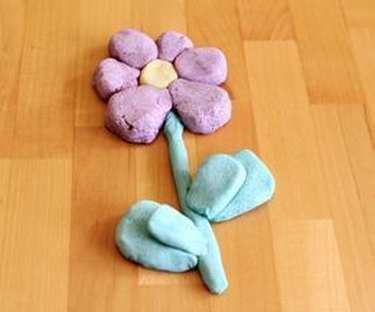
Use your hands to mold the various colors of dough into a three dimensional piece of art. Once your masterpiece is complete, leave it out to dry overnight.
Alternatively, you can place it on a baking sheet lined with wax paper and bake it in the oven at 350 degrees Fahrenheit. Check on your dough every 30 minutes. It will take two to four hours to bake, depending on the thickness of your project.
Step 5
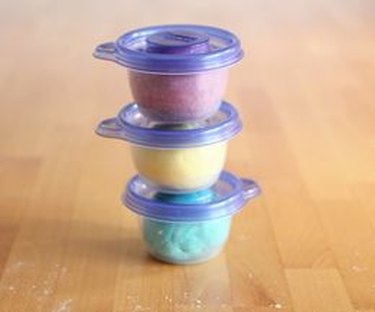
The remaining dough can be stored in the refrigerator in air-tight containers.
Tip
You can skip the food coloring and paint your art with craft paint once it has hardened.