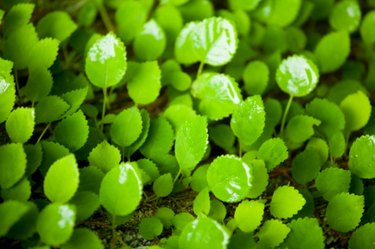
Photosynthesis occurs in organelles known as chloroplasts in plants, according to the University of Illinois. Chloroplasts used to live as free bacteria, which invaded non-photosynthetic cells and eventually became embedded in plants.
Pigments
Video of the Day
Plants have pigments known as chlorophyll a, chlorophyll b and carotenoids to absorb sunlight. Cyanobacteria contains chlorophyll b and specialized protein complexes known as phycobilisomes to obtain light energy. Other photosynthetic bacteria depend on carotenoids and bacteriochlorophyll, which resemble chlorophyll.
Video of the Day
Raw Materials
Plants use water and carbon dioxide to conduct photosynthesis. Except for cyanobacteria, photosynthetic bacteria cannot process water. Instead, they use inorganic or organic molecules they find in their environment, such as hydrogen sulfide and sulfur compounds.
Production of Oxygen
Plants produce oxygen as a byproduct of photosynthesis. Except for cyanobacteria, which are suspected to be the first organism to produce oxygen, photosynthetic bacteria don't produce oxygen. In fact, many of these bacteria can only survive in environments with low levels of oxygen.