Western and non-Western art are different in terms of techniques and mediums used, culture, aesthetic ideals, religion and philosophy. Non-Western art refers to art that is not derived from European or North American art history and ideals. This includes art from Africa, the Middle East, South America, East and Southeast Asia, and so on. The differences between Western and non-Western art are numerous, but there are fundamental differences that should be understood.
Differences of Medium
Video of the Day
Artistic works are created using a variety of mediums. For example, many Western paintings are done on canvas, while many traditional Chinese, Korean and Japanese paintings have been done on thinner rice paper. The plastic arts in Western society often focus on sculpture, with sculptors often using stone and metal. In many societies in Africa, Asia, South America and the Middle East, however, bead-work, textiles and woodwork are very important mediums.
Video of the Day
Aesthetic Differences
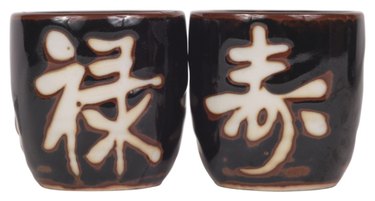
Realistic depiction of the human body has been important in Western art for centuries. The illusion of three-dimensional space being created on a two-dimensional painting is also a central part of Western art. Non-Western art may or may not focus on the human form, however. For example, geometric patterns are much more important than the human form in some forms of Islamic art. Western art often places a premium on the use of color, whereas in China and Japan, calligraphy using simple black ink is considered high art.
Cultural Differences
Culture plays a vital role in determining artistic products. Art can be effected by everything from food, language, social customs, music and literature and geographic location. Many non-Western cultures focus on the family and the society, and art is often seen as communal. In fact, throughout history many painters and architects in Japan, West Africa, and all over the world have left works without their names on the art. Western culture places primary importance on the individual, which can be seen in the more self-expressive nature of much Western art.
Religious and Philosophical Differences
Philosophy and religion are important influences on many artists in all cultures. Christianity has been a powerful influence on Western art, as have secular philosophies that may have been reactions to Christianity. In much of Asian art, Buddhism and the depiction of the Buddha has shaped many artists. Hindu deities hold vast symbolic significance in India. The geometric patterns that are common in so much Islamic art are thought by some to represent the eternal nature of Allah, or God.