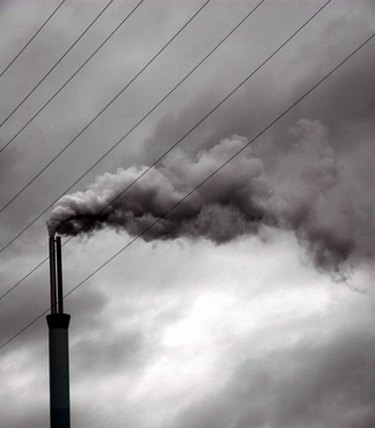
Human industrial and commercial activity cause air pollution, and this can damage plants both in the short and long term. Although air pollution has decreased in most of the developed world due to strict regulations and controls designed to improve air quality, pollution is still a significant problem in the developing world. Ammonia, nitrogen dioxide, sulfur dioxide and ozone are the biggest air pollutants affecting plants.
Direct Chemical Damage
Video of the Day
Sulfur and nitrogen emissions from heavy industry can devastate plants, including large tracts of important forest. Sulfur dioxide and nitrogen dioxide damage plants by destroying cellular membranes and inhibiting photosynthesis and respiration. This leads to stunted growth, leaf loss and injury, and more susceptibility to insect damage. Plants damaged by sulfur dioxide often look pale and bleached.
Video of the Day
Ozone Pollution
Ozone is an air pollutant that negatively affects plants. An accumulation of tropospheric ozone can have a significant impact on plants. The gas blocks plant stomata, preventing respiration and slowing down the plant's rate of photosynthesis, weakening and sometimes killing the plant. Ozone that enters the plant through its stomata can also destroy plant cells. Conversely, thinning of the protective ozone layer high in the Earth's atmosphere by chemical pollutants can also damage plants by exposing them to high levels of ultraviolet light.
Particulate Damage
Air pollution from tiny particles of coal or cement dust can form a thin film on plant leaves, lowering light levels and reducing the plant's rate of photosynthesis. Some toxic airborne dusts, such as cement dust, contain chemicals that can dissolve plant leaf tissue. Particulate pollution can also damage plants when it settles on soil because plants absorb toxic substances from the soil through their root systems.
Acid Rain
Acid rain forms when the acidic chemicals in air pollutants combine with water droplets in the atmosphere. The water turns acidic and, when it falls as rain, the acid can severely damage plants. Acid rain destroys plant leaves and also soaks into the ground, damaging the soil and making plant germination and growth impossible. Acid rain also affects agriculture and food supplies by damaging crops and reducing yields.
- Tree and forest effects on air quality and human health in the United States
- PLANT RESPONSE TO AIR POLLUTION
- Ozone Effects on Plants
- Air Pollution Effects on Vegetables
- China’s Air Pollution Sharply Limits CO2 Uptake by Plants on Large Scale, Study Shows
- U.S. Environmental Protection Agency: Air Topics