This Season
 

Facts on Bathroom Germs

Facts on Bathroom Germsthumbnail
Facts on Bathroom Germs

The first time a friend of mine admitted she never used public restrooms and seldom used bathrooms in other people's homes, I was taken aback. She wasn't phobic, she simply didn't trust how germ-free toilets and sinks were if she hadn't cleaned them herself. Limiting? Certainly. Was her distrust based on fact? Quite possibly. The truth is, germs do thrive in moist spaces, and vulnerable people can get sick from germs in a bathroom. But we would be kidding ourselves if we thought the germs stayed there. Believe me, they travel! So the healthier your immune system is, the better you will fend off germy invaders in any room of the house. However, given the moist environs in a bathroom, nearly every surface is a breeding ground for bacteria to flourish--even the air we breathe. Right now, though, let's focus on where they are in the bathroom and what we can do about it, so that a trip to the toilet is as good as a trip to the spa and not the barn.

Related Searches:
    1. Toothbrushes

      • Toothbrushes often share spaces such as a cup or holder. Residual particles of food and blood can remain in the bristles of a toothbrush, and under the right conditions can become harmful. Saliva can contain the rhinovirus (the cause of the common cold) which can survive up to three hours outside the human body. Candida is another common germ found on toothbrushes, as well as streptococci mutans and lactobacilli bacterium from dental plaque.
        A nontoxic and effective solution to killing bacteria on toothbrushes (and cups) is to apply a drop of an antimicrobial essential oil such as clove or peppermint after each use. Not only does this create a unfavorable environment for bacteria to grow, it will improve the health of your gums and give your toothpaste a real kick of flavor. Or, if you'd rather, switch to disposable wooden tooth picks.

      Surfaces

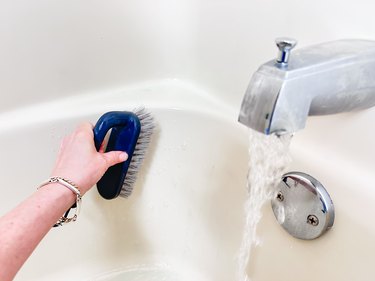
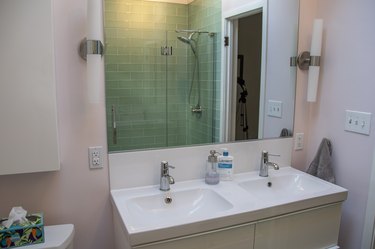
      • Flat bathroom surfaces such as counters, floors, shelves and cabinet drawers attract airborne debris, such as microscopic particles of dead skin that fall from our bodies and clothing, germs carried airborne by the flush of the toilet and germs spread by touch or by setting an object or towel upon a surface. In public restrooms, faucets have higher concentrations of germs, simply because their surfaces are seldom dry, and people handle them frequently with bare hands. Shower curtains show the growth of fungi and bacteria most visibly, as they are most often just left to dry and never wiped down as a sink counter top might be every day or week. The inner walls of a tub are prime real estate for growing bacteria from dead skin cells also.
        It's impossible to clean all surfaces after every use, so keeping a bathroom well-ventilated and dry will go a long way toward keeping the growth of bacteria to a minimum. Spraying surfaces once a day with a nontoxic antimicrobial or disinfectant such as aromatic vinegar water is better than nothing. Or, invest in an oil diffuser, and diffuse a purifying antimicrobial essential oil such as thyme or lemon while you shower. Hospitals in Europe diffuse oils regularly to combat the spread of airborne germs, as do selected medical facilities in the United States.

      Sponges, loofahs and facial towels

      • Sponges and loofahs harbor bacteria in their porous crevices, spreading germs when reused. More than one esthetician has cautioned me to never use a face cloth twice, but to always use a fresh one. Dead skin cells, bodily oils, nasal secretions and even yeast remain on these cleansing "tools" for bacteria to feast and multiply on, so common sense tells us to throw them in the laundry when done. The hotel industry may desire to save energy by having us reuse towels, but any material that we wash our bodies with should be cleansed properly after each use.

      Toilet Talk

      • The toilet is a great invention, except for those of us who have to clean it. Pathogens originating from the toilet bowl are a cause for concern, and if some are catapulted into the air when flushed, then it behooves us to clean surfaces and disinfect toothbrushes. Excretions do contain natural flora that are useful in the environment, but unless you have a good plan for removing and treating it, your toilet bowl will be a contributor to the concentration of bacteria in the bathroom. Urine is a sterile fluid, and we shouldn't worry when we come into contact with it. But if you have read the hype on respiratory pathogens and travel with a face mask, a better piece of advice would be to keep a bottle of peppermint essential oil to inhale instead, chew on Vitamin C and trust your immune system to protect you.
        For odor control try white vinegar in the toilet. It eats uric acid, and 1/2 cup in the bowl will help keep odors neutral while saving flushes. Also, keep the toilet brush in a solution of purified water, clear dish soap and antimicrobial essential oil of tea tree or peppermint.

      Final Considerations

      • The whole point of keeping a bathroom, and yourself, clean is to prevent the spread of disease and illness. Health is priceless, to be sure, but understand that the germiest of bathrooms can be survived if your immune system is strong. We can go the extra mile to keep germs at a minimum in the bathroom, but at the end of the day, germs are everywhere. So keep a bottle of chewable vitamin C in the medicine cabinet and teach others some of your healthy habits while you are at it.

    Related Searches

    References

    Resources

    • Photo Credit Images by Denise Graziano

    Read Next:

    Comments

    You May Also Like

    • How to Reduce Germs in a Bathroom

      The bathroom is often the first front of the war against germs, and you may need to take daily actions to keep...

    • Facts About Toilet Germs

      If you had to choose the dirtiest thing in your bathroom, you would probably choose your toilet. However, research disagrees with you....

    • Gym Germs in Bathrooms & Locker Rooms

      Gym bathrooms and locker rooms are breeding grounds for bacteria and germs, so use a towel to keep hands from touching knobs...

    • Bathroom Facts

      Most people don't spend much time thinking about the bathroom, but it's one of the most important rooms in the house. Learning...

    • Gross Facts About Bacteria

      When most people hear the word "bacteria," they immediately cringe and think of rotting food and sicknesses. However, bacteria, the oldest form...

    • How to Reduce Toilet Germ Spread

      Fecal matter carries diseases that are transmittable via toilet seats and unsanitary washroom surfaces. This makes bathrooms one of the germiest places...

    • How to Avoid Germs in Public

      As unappealing as it may be, the reality is the handles of a grocery carts, gas pumps and escalator railings are filthy....

    • Germs & Housecleaning 101

      Facts on Bathroom Germs. The first time a friend of mine admitted she never used public restrooms and seldom used bathrooms in...

    • Facts About Germs in the Kitchen Sink

      You prepare your food, wipe the counters and feel pretty good, right? Maybe you should think again. Most cases of food-borne illness...

    • How to Fight Germs in Public

      Germs are everywhere, and while a bit gross, they are not always bad. A certain amount of exposure to germs helps to...

    • What Kind of Bacteria Is on Toilet Seats?

      People who are germ-conscious often become even more cautious when using public facilities--especially when sitting on a toilet seat. Bacteria does reside...

    • Information on Toilet Seat Germs

      Toilet seats are often considered one of the most germ- and bacteria-ridden objects in a house or public place. Toilet seats are...

    • Toilet Seat Facts

      Toilet seats provide a more comfortable area to sit on while using the restroom. Located between the toilet's bowl and lid, toilet...

    • Public Restroom Facts

      You've been there. We all have. Waiting in line in a small, cringe-inducing public restroom for a stall or urinal to become...

    • How to Help Kids Avoid Germs

      Learn the best ways to help kids learn to avoid germs by teaching hand washing and more with expert childcare tips in...

    • Germs From Not Closing the Toilet Lid

      Your bathroom gets a lot of traffic throughout the day. With this traffic comes the introduction of germs and bacteria, particularly around...

    • Common Ways Germs Are Spread

      Germs can be spread easily between people, food and animals. It is important to wash your hands on a regular basis, especially...

    • How to Use a Men's Public Bathroom Without Annoying Everyone

      The bathroom. Everyone has to use it, so why not make the experience as pleasant as possible for everyone involved? Consider this...

    • Facts About Bathroom Sinks

      Bathroom sinks provide a convenient way to wash up without having to travel to the kitchen, and they are very diverse in...

    Follow eHow

    Related Ads