-
The Knit StitchBy mastering fewer than 10 basic stitches, you can follow most any knitting pattern. Stitches can be combined to create projects ranging from simple dish cloths to complex sweaters.
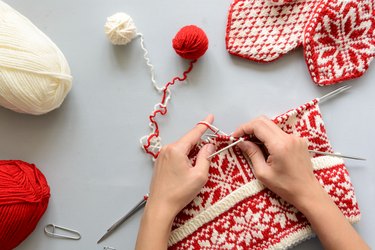
The knit stitch (k) is the most fundamental knitting stitch. Formed by making loops that interweave with one another, knit stitches look like little "Vs" when seen from the knit side of a knitted fabric. The knit stitch is made by using a needle to draw a loop of yarn (inserted in the back of the knitting) through the existing stitch, resting on the other needle.
Unlike the knit side of knitting, which is smooth, the purl stitch side is bumpy, resembling a brick front. To make the purl stitch (p), hold the yarn facing your knitting rather than in the back, as done in the knit stitch.
The stockinette stitch is done by knitting one row and then purling the next. The result is one side that's knitted and the other is purled.
The garter stitch is the simplest of all knitting stitches because only one stitch, the knit, is used. Unlike the stockinette stitch, which has a smooth and a bumpy side, the sides of the garter stitch are identical.
The "knit 2 together stitch" (k2tog) is used to decrease. Because knitting fabric can't be cut into patterned shapes, knitters use decreasing as a way to shape their knitted pieces. To k2tog, subtract a stitch to make your work narrower. Simply insert the right needle into two stitches rather than one.
The slip stitch (ss) is another technique used to decrease by transferring a stitch from the left needle to the right one without working it.
The yarn-over stitch (yo) is for creating holes or open-work designs, such as shawls. It's done by bringing yarn across knitting (from back to front), and then knitting the next stitch.
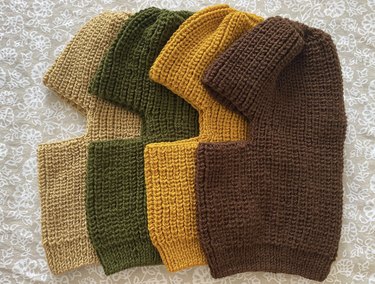
The ribbing stitch (rib) produces vertical columns of knit and purl stitch, done by working a certain number of knit stitches followed by the same number of purl stitches. Usually, a pattern will signify to either "knit one, purl one (k1, p2) " or "knit two, purl two" (k2, p2). -
The Purl StitchWhen you choose a particular stitch, consider the stitch multiples required for each pattern stitch. For example, the double moss stitch works in multiples of four stitches. -
RibbingA knitting counter can help you keep track of the number of completed rows. Each time you finish a row, advance the counter to the next number. Also, when counting rows of a garter stitch, note that two rows of knitting make up one ridge.
Because reversible stitch patterns look the same on both sides, they're ideal for projects in which both sides will show, such as hot pads, scarves and afghans.
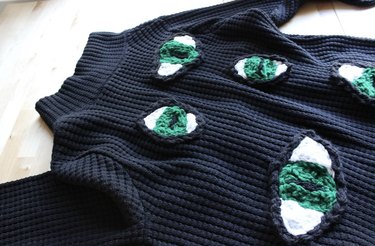
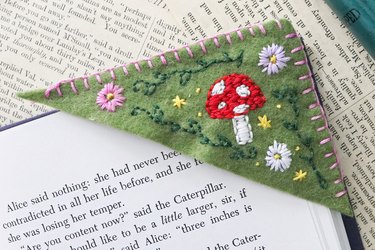
Use the duplicate stitch (also known as Swiss darning) to add embroidery, decorating knitting with colors. Duplicate stitches are done working the yarn of another color on top of knit stitches. Often duplicate stitches are substituted for changing colors of yarn while knitting, which is more complicated. The duplicate stitch can be worked vertically, horizontally or diagonally. - It's a common misconception that you must knit a stitch after yarning over. A yarn-over is wrapping the yarn around the right needle to make new stitch and is not using a stitch from the left needle.
-
Count your stitches after doing each row to ensure you've knitted the correct number of stitches. It's much easier to catch a mistake sooner rather than later.
Watch out for dropped stitches, which are stitches that fall off the needle, creating holes in your knitting. However, if you do have a dropped stitch, you can easily pick it up using a crochet hook.