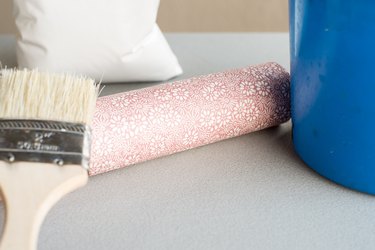
Wallpapering a room is an inexpensive way to redecorate and beautify a room. The choices of wallpaper patterns are endless, and most wallpaper available today is pre-pasted, making the job quick and easy. However, vintage or handmade wallpaper and borders require the use of wallpaper paste. Wallpaper paste is easy to make with a few materials and implements you probably have on hand in your kitchen.
Easy Cornstarch Paste
Video of the Day
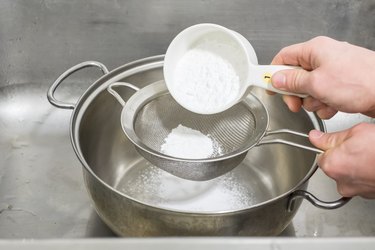
Cornstarch paste is easy to make and works well for both wallpaper and papier mâché. Make one batch at a time to avoid lumps in the paste. For one gallon of paste, sift one cup of cornstarch into a large pot. Slowly add one gallon of hot tap water a little at a time, whisking thoroughly after each addition of water with a wire whisk. Heat the mixture on medium high heat on the stove, stirring constantly, until it thickens and becomes clear. Let the paste cool to room temperature for use.
Video of the Day
Classic Wheat Wallpaper Paste
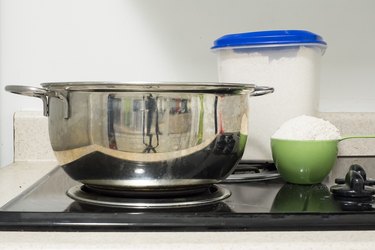
Classic wheat wallpaper paste used to be readily available in paint and wallpaper stores, but has become more difficult to find due to the popularity of pre-pasted papers. To make wheat paste, measure 5 cups of wheat flour and 1 cup of sugar into a large pot and stir them together. Place over a low heat and begin to slowly add 1 gallon of water, using a whisk to work out all the lumps. Cook until the mixture begins to look clear. Remove from heat and cool to room temperature.
Using Your Paste
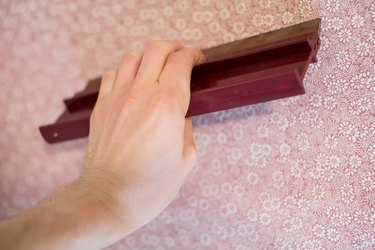
Use a wallpaper brush or roller to spread a thin layer of the paste on your wallpaper or border. Apply the paper or border to the wall, then flatten it with a wallpaper squeegee. Wipe the paper with a damp sponge to remove any paste residue. The paste can be thinned with a little warm water if if seems too thick.
· Either paste can be stored in an airtight plastic or glass container in the refrigerator for up to 30 days.
· To rejuvenate stored paste, add a little boiling water and whisk it until smooth.
· Either paste can be used for papier mâché projects, or for any paper project that requires paste.