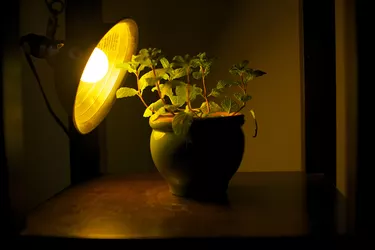
The problem with finding a cheap way to make a grow light for indoor plants is that you more often than not get what you pay for in the form of dead plants. With recent advances in lighting technology, there's really no excuse for not paying $20 for a decent start-up lighting system, but if you enjoy DIY projects, there are a few cheap ways to make indoor grow lights.
Determine Your Plant's Light Needs
Video of the Day
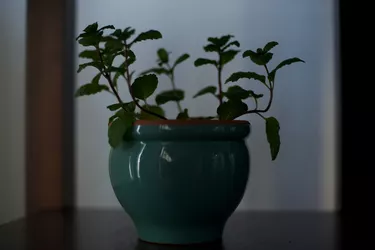
Your success with DIY grow lights for indoor plants will depend on the plants you are growing and the quality of window light that supplements your grow lights. If you have a sunny, south-facing window, you might not need grow lights at all. If you get some sun during the day, but not much, your plants might do well with cheap DIY grow lights. If, however, you are trying to grow sun-loving plants in a dingy, basement apartment with only a homemade grow light, don't expect much success unless you are willing to experiment a bit.
Video of the Day
Build Your Own Grow Light Housing
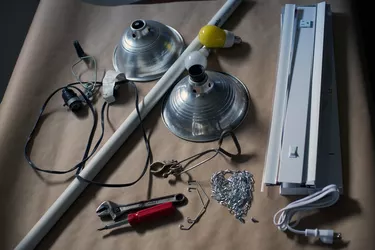
If you don't mind buying specialty grow light bulbs, but you want to build your own light housing, consider taking apart an old lamp or two and recombining the fitting to form one suitable for your needs. You can use PVC piping to build a frame and a basic knowledge of wiring will help with constructing the fitting. You should run your first test with an inexpensive bulb to be sure you have no wiring faults before assembling with the expensive grow light.
Build Your Own Grow Light Frame
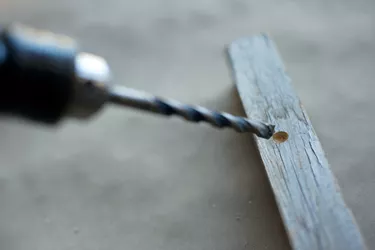
If you have fluorescent grow lights and a ballast, but you need a frame in order to construct your own mini-greenhouse set-up, a great material for experimentation is pressed wood board cut to fit. If you build an adjustable frame using removable wing nuts, you can alter the height of your wooden frame as the plants grow taller. Drill holes in the sides that allow you to adjust the height by moving the wing nuts. Design yours based on the simple plan by Extreme DIY. Many hardware stores will cut your wood for free.
Another possibility is to build a simple wooden frame, like a picture frame, that is just a fraction smaller than your ballast, about 1/8 inch all around. Use cup hooks and a chain to suspend the frame from the ceiling (which also makes it adjustable to plant height). Rest the ballast gently inside and you have a cheap, easy way to make your own grow light for indoor plants.
Plant Light Spikes
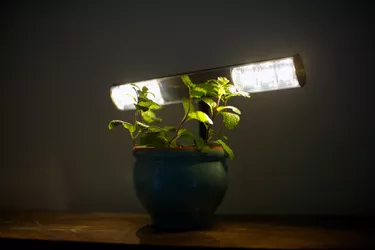
Looking for something more advanced? You might want to experiment with Popular Science's DIY Grow Lights, which use small LED lights in a small cylinder that sticks into the potting soil. Although some users have complained that the instructions are less than clear, a little experimentation will result in a stylish and functional way to provide light for your indoor plants.