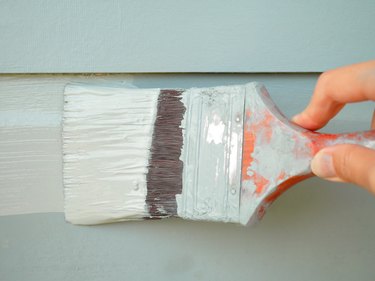
Popular for its all-weather durability, aluminum siding is a long-lasting home facade that requires little maintenance. While it maintains its appearance over time, you may find you're ready for a change at some point. Maybe you notice the paint is peeling or your home looks a little outdated. The good news is that you can repaint aluminum siding relatively easily. It takes a good cleaning and the right type of primer and paint, but the end result makes your home look new and updated.
Things You'll Need
Preferred primer
Paintbrush or roller
Acrylic latex paint, preferred color and finish
Video of the Day
1. Cleaning the Siding
Starting with a clean slate helps the primer and paint stick to the siding. It also gives you a smooth finish. Most home owners have discovered that their aluminum siding has a chalky later dusting its surface. Over time, dirt and grime also collect on the siding.
Video of the Day
You can use a cleaner specially designed for aluminum siding, but a mixture of trisodium phosphate (TSP) and water works just as well. Use the directions on the TSP package to mix the cleaner correctly. You can add a cup of chlorine bleach to the mixture if your siding also has mildew on it. For a small house, you can wash the siding by hand using a sponge or scrub brush, but for any size house, clean the surface faster by using the mixture with a pressure washer, making sure you use a nozzle that minimizes damage to painted siding. Rinse the siding with clean water, and let the siding dry completely before you start the priming and painting process.
2. Repairing Small Issues
A coat of paint gives your house a new look, but it won't cover up blemishes on the siding. If you notice any peeling paint, scrape it away to make the siding smooth. Help the scraped areas blend in by gently sanding the edges. If a section has more severe damage, you may need to replace it with a new section of aluminum siding. Wash any areas where you have repaired the siding before proceeding.
3. Timing the Work
Time your painting job for a day that's mild and overcast. Hot or cold temperatures affect how quickly the paint dries, which can interfere with how well it sticks to the siding. Most latex paint won't cure properly unless the temperature is above 60 degrees Fahrenheit, although some products are made to work in colder temperatures. Keep in mind the overnight temperatures, too. Even if it's warm during the day, colder nighttime temperatures can stop the curing process or cause dew to form. Direct sunlight can also affect drying time. Avoid days with weather elements like wind or rain that can ruin the paint. Always read the product label to find out the ideal temperature range and other painting conditions to consider.
4. Applying the Primer
Picking a good primer sets the stage for a smooth coat of paint. Primer comes in both latex and oil-based. While you can use either, oil-based primer tends to work better on aluminum. Latex primer can cause a chemical reaction with the aluminum that forms small gas bubbles. Overtime, those bubbles can show or cause the paint to bubble and flake. Choose a primer made for metal for the best results.
Putting drop cloths over the landscaping near the house keeps the primer and paint from dripping onto your plants. Apply the primer as you would on any surface using a paintbrush or a roller. You will likely need a paintbrush to reach the small areas. Let the primer dry fully as indicated on the packaging.
5. Painting the Aluminum
Exterior acrylic latex paint works best on aluminum siding. Choose a paint recommended for metal. A flat or satin finish paint is ideal for your aluminum siding. A finish with gloss can draw more attention to dents or other blemishes in the siding. The lower-shine finishes hide those flaws better.
As with the primer, apply the paint with a paintbrush or a roller. A brush works best for smaller areas, in corners and near trim. You'll likely need at least two coats of paint to get good coverage. Let each coat of paint dry fully before applying the next. When everything is finished and dry, remove the drop cloths, and pat yourself on the back for a job well done.