
eHow launches Android app: Get the best of eHow on the go.

About

Tips for Using Pillows for Neck Pain

Contributor
By eHow Contributing Writer
(0 Ratings)

If you tired of waking up with neck pain and want a good night's sleep, you need to sleep on the right kind of pillow and learn how to position the pillow properly.

    Tension and Stress and Neck Pain

  1. If you are under stress and experiencing tightened muscles, the tension often settles in your neck. If your pillow is not supportive or comfortable, sleeping will exacerbate your pain.
  2. Body Pillow

  3. A good pillow will allow your skeletal system to relax. A good pillow can be used to alleviate the pressure from body prominences such as your shoulders, ankles, knees and hips. If you use a pillow as long as your body, this is beneficial to side sleepers, according to Spine-health.com because it can be used to support the head and neck as well as the knees and legs.
  4. The Ideal Pillow

  5. The ideal pillow allows the neck to curve slightly forward and supports the head just as the neck does when you are sitting or standing. It is important to maintain this curve even when you are lying down. If your pillow is too high and your neck is abnormally bent, it will cause muscle strain in your shoulders and neck. However, if your pillow is too low, your neck muscles will also be strained. The pillow should be 4 to 6 inches high and should support the shoulders, head and neck.
  6. Your Personal Preference

  7. If the pillow feels comfortable with the right amount of firmness, you will probably sleep well. Some people like a warm, flannel pillowcase, but others like a smooth, cool, cotton pillowcase. When you first get a new pillow, it may take a few nights for your neck to adjust to the new contours. If your neck never does, then perhaps you have selected the wrong pillow.
  8. Need Support

  9. According to Informaworld.com, the ideal pillow for preventing neck pain should provide good support for neck lordosis (which is an abnormal curvature of the spine forward) and should be soft. This type of pillow will also reduce your risk of getting a headache. Cotton-filled pillows eventually become less firm and, as a consequence, won't support your neck adequately after a time.
  10. Position Your Pillow

  11. Marian Minor, PT, PhD recommends selecting a pillow that supports your neck and does not tilt your head forward when you are lying on your back. If you are a side sleeper, your pillow should support your head in line with your neck. However, your head should not be tilted upward or downward. The pillow should fill in the space between your ear and the mattress.
  12. Put a Pillow Under Your Arm

  13. Feather pillows are good if you like punching your pillow into a particular shape that you find comfortable and accommodating. People who routinely suffer from neck pain sometimes find that placing extra pillows under their arms, to support their arms, is comfortable.
  14. Cervical Pillows, Use a Towel or a Roll

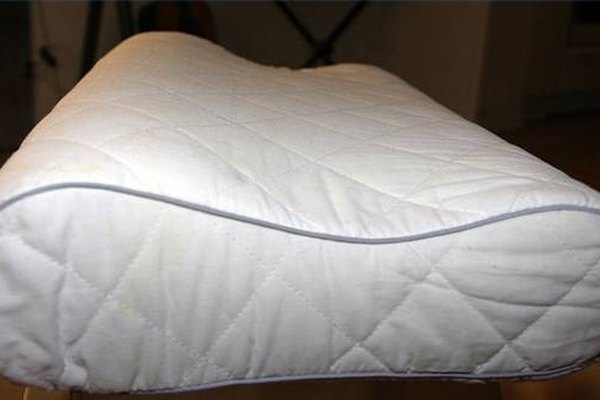
  15. Consider using a cervical pillow that provides extra support for your neck. Some people like lying on pillows that are shaped like rolls. Fold a towel lengthwise and wrap it around your neck. This may provide comfort and relief from pain. Cervical pillows are also called orthopedic pillows. This type of pillow has a deeper depression where the head lies; this provides extra support under the neck by filling the hollow space that is created by the neck when it is in a proper position, and it keeps the neck aligned with the spine
  16. Prop up Your Knees, Switch Sides

  17. Dr. Suzy of Pure-life.com recommends sleeping with your pillow under your knees when you are sleeping on your back or sleeping with a pillow between your knees if you sleep on your side. Frequently switch sides if you are a side sleeper and position your pillow so that your neck and head are level with the bend and not tilted at an awkward angle.
  18. Linear Traction Neck Pillow

  19. If you have arthritis in your neck, Neckpainsupport.com recommends using Arc 4 Life's cervical linear traction neck pillow. This pillow keeps your neck and head in a proper position. The "V" part of the pillow provides cervical traction. While sleeping on your back, your neck should lie where the "V" is. This will gently stretch your spine while you snooze. Neckpainsupport.com also advises putting pillows under your spine or your knees while you are sleeping because this takes pressure off of the lower back. You may experience some soreness when first using the cervical linear traction pillow because it is changing your regular neck and head positioning, and different muscles are being used.
Subscribe

Post a Comment

Post a Comment Post this comment to my Facebook Profile

eHow Article: Tips for Using Pillows for Neck Pain

Related Ads

Get Free Health Newsletters

Copyright © 1999-2009 eHow, Inc. Use of this web site constitutes acceptance of the eHow Terms of Use and Privacy Policy.   en-US Portions of this page are modifications based on work created and shared by Google and used according to terms described in the Creative Commons 3.0 Attribution License.

Live Strong Partner
Livestrong_eHow Health