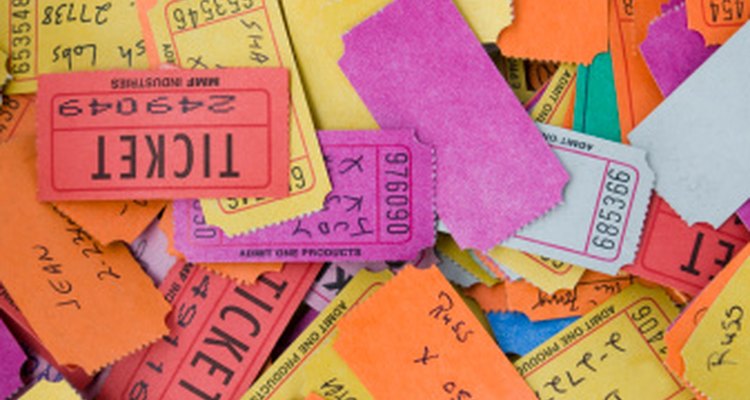
Holding a raffle is an easy way to raise money for a cause. Nonprofit organizations and schools use raffles to help raise money. The difference between these organizations doesn’t change how the raffle is run; however, nonprofit organizations require a special license in order to hold a raffle in Colorado. The most common types of raffles are 50/50 draws and prize draws. Both require little in the way of set up, though you’ll need to set aside more money if the raffle is going to have a special prize.
Instructions
Decide on the type of raffle you’re going to hold. A 50/50 raffle doesn’t need any advance planning since half of the money raised in ticket sales is the prize, but if you want to give a prize you need to decide ahead of time just what that prize will be. Gift baskets and gift certificates are relatively inexpensive and ensure that most of the money raised will go toward your cause.
Apply for a raffle license with the Colorado Secretary of State Licensing Division.This license is required for any organization that intends to raise money for their cause or institution. The license is valid for a year, beginning on Jan. 1 and ends at 11:59 p.m., Dec. 31. The amount of applicable taxes are dependent on how much money your raffle raises each quarter. The licensing division website has a list of all neccesary fees and application forms (see References).
Purchase the tickets. Dollar stores and party supply shops sell rolls of raffle tickets. Make sure that whatever style of tickets you purchase there are serial numbers printed on each ticket: one for you and one for the person purchasing the ticket.
Decide on the price of the tickets. The price of the ticket will be dependent on the prize awarded at the draw and the amount of tickets you intend to sell. You can charge less money for 50/50 tickets, but if you’re holding a raffle that awards a prize you need to make sure that you cover the cost of the prize with your ticket sales and still make money. Create price deals that will encourage people to buy more tickets. If you’re selling the tickets at $1 a piece, sell three for $2.
Advertise the raffle. Place fliers in local community centers and pubic notice boards. Include information about the date of the draw and how the tickets will be sold (event or door-to-door). Make sure that you state clearly what organization or cause will benefit.
Sell the tickets. If the raffle is being held at a party, set up a booth or circulate volunteers around the room to sell tickets. When there’s no actual event, go door-to-door selling the tickets. You’ll need to keep track of the names and phone numbers of people who purchase the tickets so that you can contact them after the draw.
Tally the amount of money you’ve raised. Rather than giving the winner an envelope full of loose change, write a check to cover the amount and include a signed receipt.
Draw the winning ticket.
Announce the winning number and present the winner with their prize. You’ll need to contact the winner if the raffle draw isn’t held publicly.
Related Articles

How to Plan a Poker Run

How to Form a Pub Crawl to Raise Money
How to Organize a Motorcycle Rally
How to Start a Motorcycle Ride Fund ...

How to Organize a Pancake Breakfast at ...
How to Organize a Charity Dinner
How to Get Celebrities for Your Charity ...
How to Hold a Reverse Raffle

How to Apply for a Commercial Loan for ...

How to Write an Invitation to a Public ...
How Does a Walk-a-Thon Raise Money?

Ideas on How to Organize a Fun Day for ...
How to Get a Tax Exempt Certificate for ...

How to Sell Raffle Tickets to Raise ...
How to Organize Community Events to ...
How to Organize a Rave
How to Write Grants for Churches

How to Obtain a North Carolina Liquor ...

How to Set Up a High School Reunion ...

How to Hold a Penny War Fundraiser
References
Writer Bio
Joanne Robitaille's first journalistic experience was in 1994, when she did school reports for a local newspaper, "Shoreline." Her articles now appear on various websites. Robitaille has a Bachelor of Arts in English and creative writing from the University of Windsor.
Photo Credits
Erik Rank/Photodisc/Getty Images