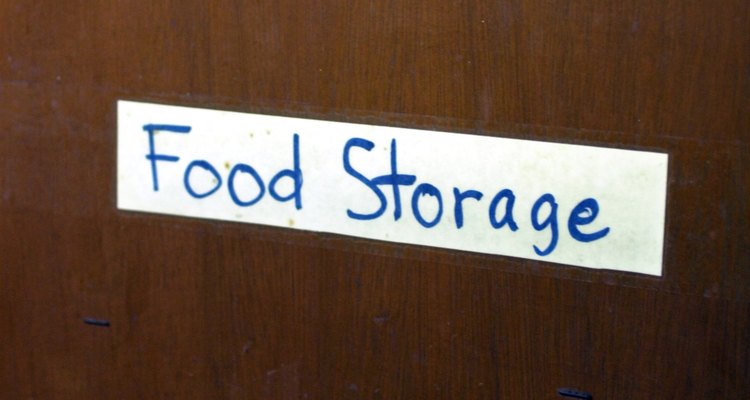
Several types of moths commonly infest kitchens, often cutting a large, destructive swath through everything from grains and flours to pet food or bird seed. Once these pantry moths find their way into your food supply, eradication is difficult because one female moth can lay from 200 to 400 eggs. The eggs hatch within a week, progressing from larvae to adult moths almost as quickly. When it comes to pantry moths, prevention is the best control.
Step 1
Inspect food carefully at the grocery store. Look for small holes in packaging, and avoid packages that are crushed or torn. Watch for pests such as eggs or larvae, which may look like small kernels of grain, in bulk food bins. If you see signs of pests, tell the store manager.
Step 2
Purchase food in small quantities that you can use within two to four months. Use older food first, and never mix old and new foods.
Step 3
Store food in clean airtight glass jars or heavy plastic containers. Glass jars with rubber gaskets and tight lids are especially effective.
Step 4
Store bird seed and pet food in sealed containers. Store large quantities in sheds or storage buildings safely away from the kitchen or pantry.
Step 5
Clean kitchen and pantry shelves regularly. Vacuum corners and tight spots with a crevice tool, then wipe flat surfaces with white vinegar or dish soap and hot water. Empty vacuum cleaner canisters or bags in an outdoor garbage can to prevent re-infestation.
Step 6
Wipe up crumbs and spills immediately. Clean your toaster often to eliminate crumbs that may attract moths.
Related Articles

How to Store Dehydrated Foods

How to Store Flours & Grains Without ...
How to Store Cashmere From Moths
What Types of Insects Eat Leather?

How Do You Keep Bugs Out of Baking ...

Does Bird Seed go Bad?
Bugs That Get Into Pantry & Food
How to Identify Grain Beetles
How to Care for Berets

How to Dry Pack Long-Term Food in Mason ...
About Weevils

Methods of Long-Term Food Storage for ...

Raw Food Diet and Parasites

How to Disinfect Sunglasses

Effective Ways of Recycling & Reducing ...

Can Bugs Grow in Spices Such As Paprika?
Purpose of Moth Balls

How to Remove the Perfume Smell From ...
How to Make Teriyaki Sauce
How to Change a Fossil Watch Battery
References
- Michigan State University Extension: Meal Moths
- Beyond Pesticides/National Coalition Against the Misuse of Pesticides: Pests in the Pantry
- University of Nebraska-Lincoln: Managing Pantry Pests
- University of California Agriculture and Natural Resources: Pests of Homes, Structures, People, and Pets, Pantry Pests
- Apartment Therapy: Tips: Bay Leaves in the Pantry
Tips
- Bay leaves may be an effective natural moth repellent. Place the leaves in food storage containers or tape the leaves inside cupboard doors. Replace the leaves with fresh leaves every few months, as they become less pungent over time. Use bay leaves along with other preventive measures, because effectiveness of the herb has not been proven.
Warnings
- Insecticides are not recommended for use in the kitchen and are generally not effective. If preventive measures aren't effective, use an insecticidal soap spray as a last resort. Mix and apply the spray strictly according to label recommendations, and never let the spray come in contact with food.
Writer Bio
M.H. Dyer began her writing career as a staff writer at a community newspaper and is now a full-time commercial writer. She writes about a variety of topics, with a focus on sustainable, pesticide- and herbicide-free gardening. She is an Oregon State University Master Gardener and Master Naturalist and holds a Master of Fine Arts in creative nonfiction writing.
Photo Credits
Thinkstock Images/Comstock/Getty Images