eHow launches Android app: Get the best of eHow on the go.

About

Planting Tips for a Hydrangea Bush

Contributor
By Amy Madtson
eHow Contributing Writer
(0 Ratings)
Hydrandea bush in bloom

Hydrangeas are an old-fashioned bush native to North and South America, the Himalayas and Asia, with more than 1,200 species. This perennial bush grows from 3 to 10 feet tall and in some species can get to heights of 25 feet! In the spring through fall it has luscious green foliage with huge flower heads bursting forth with colors of pink, purple, blue/lilac and white in mid-summer. Hydrangea bushes are a rather hardy plant and make a gorgeous addition to any landscape. The flowers work well in summer flower arrangements.

From Quick Guide: Hydrangea Plant Guide

    Site and Soil Prep

  1. Choose an area that gets full sun in the morning and partial shade in the afternoon. Do not plant in full shade or your plant will become thin and sparse. Hydrangeas planted in northern areas that have milder summers can stand full sun all day. Also make sure there is enough room for your plant to grow, keeping in mind that an average hydrangea bush grows 4 feet by 4 feet and can get larger.

    Prepare the soil by tilling to loosen the ground. If your soil is heavy or clay and does not drain well, mix in loam soil with generous amounts of rich compost. Hydrangeas do not like water-logged soils.
  2. Planting, Watering and Fertilizing

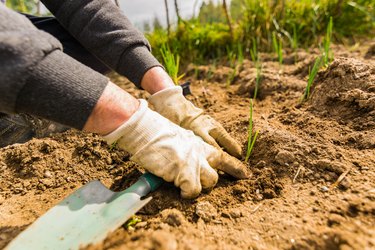
  3. Plant in early summer to early fall. It's best not to plant in springtime when an unexpected frost can kill your hydrangea. Do not plant in really hot temperatures; if necessary wait until fall when temperatures are cooler but before the first frost. Dig a hole twice the width of the root ball and only as deep. Set the plant in the hole with the top of the root ball level with the ground's surface. Fill in with soil; firm over.

    Water the plant thoroughly after planting. Hydrangeas like a deep watering usually once a week. Use a hose instead of a sprinkler, and do not let the soil become water-logged. Overwatering can cause root rot.

    Finally, fertilize two times during the summer, usually in June and again in August. A slow-release fertilizer low in nitrogen works best. Too much nitrogen in a fertilizer encourages more foliage growth and will result in fewer blooms. Spread the fertilizer around the drip line of the plant about 2 to 3 inches out from the trunk.
  4. Pruning and Pests

  5. Hydrangeas take about a year to get well established. Although you may get some flowers the first year it is planted, the number of flowers will double by the second year, and the size of the bush will usually double in size too.

    Proper pruning will ensure a full, well-producing bush. Do not prune the first year; wait until the second year after blooming is over. Hydrangeas bloom on what is called old wood, meaning growth that takes place in late fall through winter. Pruning therefore should be done immediately after the bush is done flowering or when the flowers are turning green, usually in late summer to early fall. If you prune in the spring you will cut off the new buds, reducing the amount of flowers you will get for that year. Your bush can be pruned back by 1/3 to 1/2 its size.

    An important note: hydrangea bushes drop their leaves in winter, leaving a bare bush. This is normal and does not mean the bush is dead. Leaves will appear in early spring.

    Pests such as aphids and red spiders are commonly found on hydrangeas. If your plant becomes infested, you will see yellowing, hole-filled leaves and spider webs. To treat, spray the leaves on the top and bottom with a 1:1 mixture of rubbing alcohol and water; this will immediately kill the pests but not harm your plant.

    Another problem that occurs is a powdery mildew on the plant's leaves. This is easily treated by mixing 1 tsp. of bleach with 1 qt. of water and spraying the leaves affected, then wiping clean with a cloth and spraying again.
Subscribe

Post a Comment

Post a Comment Post this comment to my Facebook Profile

Related Ads

Get Free Home & Garden Newsletters
Copyright © 1999-2009 eHow, Inc. Use of this web site constitutes acceptance of the eHow Terms of Use and Privacy Policy .   en-US Portions of this page are modifications based on work created and shared by Google and used according to terms described in the Creative Commons 3.0 Attribution License. † requires javascript

eHow Home and Garden
eHow_eHow Home and Garden