



The Grand Canyon is one of the most famous natural attractions of the United States and is considered to be one of the Wonders of the Natural World. Three states border the Grand Canyon: Arizona, Utah and Nevada.
Geography
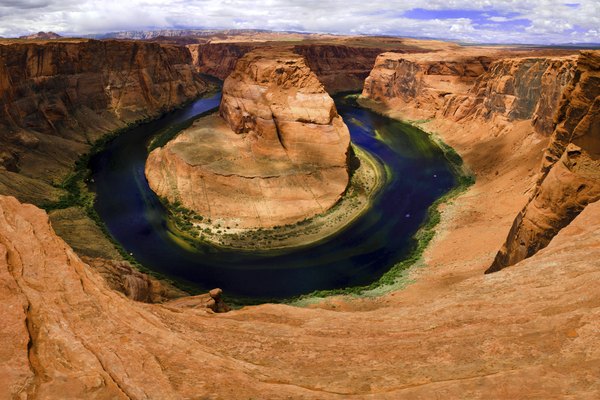
The Colorado River carves the Grand Canyon out of the Colorado Plateau. While the river passes through several states, the Grand Canyon section is limited to sections of the river in Utah and Arizona to the Nevada border.
Size
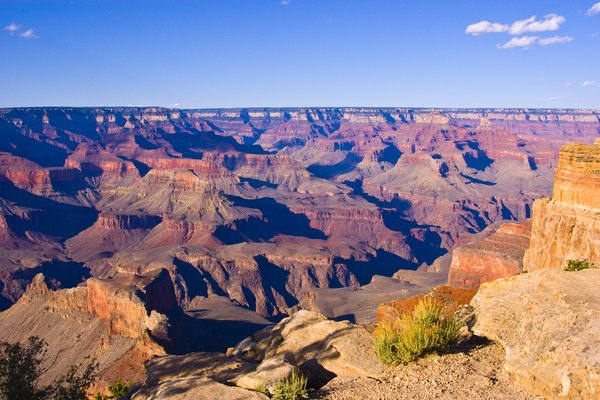
The Grand Canyon is 277 miles long and between 4 and 18 miles wide. While it varies greatly in depth, it is over 6000 feet deep in places.
Considerations
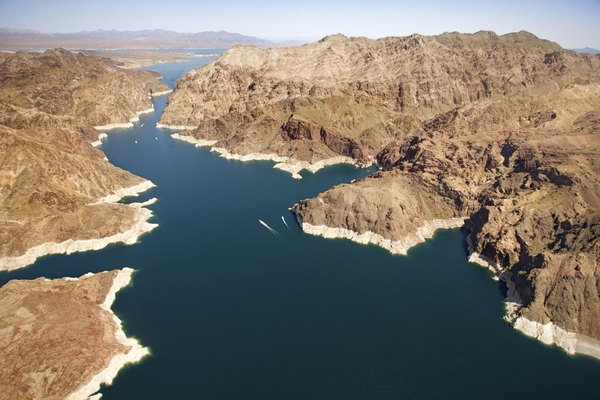
While Arizona is known as the "Grand Canyon State," it is not the only state with a claim on the Grand Canyon. Grand Canyon National Park is contained within the state of Arizona, while the attached Glen National Recreation Area is in Utah and the Lake Mead National Recreation Area borders the Grand Canyon in Nevada.
History
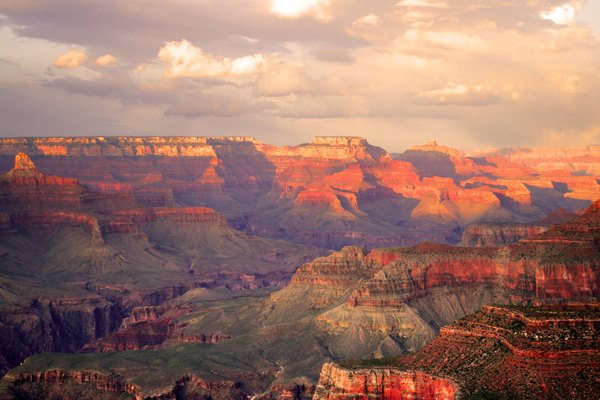
Native peoples have lived in the area of the Grand Canyon for centuries. Spanish explorers first saw the Canyon in 1540, but there was no extensive European or American exploration until the mid-nineteenth century. President Roosevelt designated the area as a national park in 1906.
Significance
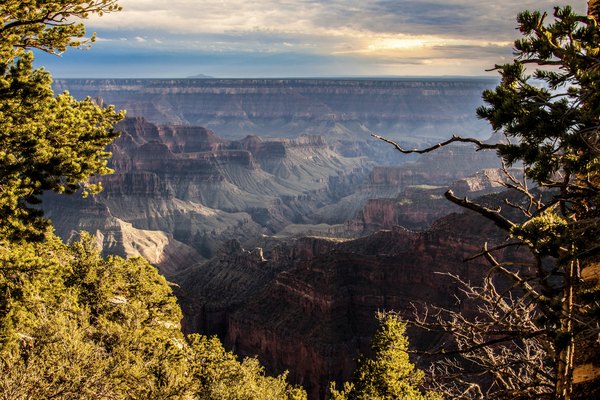
Most of the visitor interest in the Grand Canyon focuses on Arizona, where views of the Canyon are most readily-accessible. You can, however, gain access to other sections from Utah and Nevada.
References
Photo Credits
- frederic prochasson/iStock/Getty Images