
Rules for Racquetball and Cut Throat Racquetball
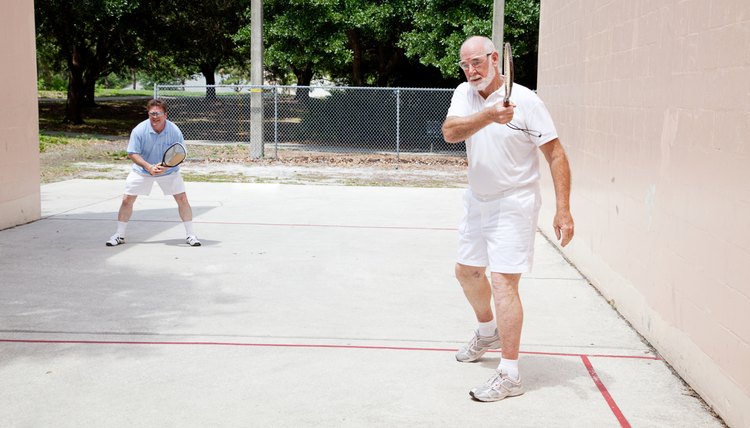
Cut-throat racquetball allows three players to compete without a fourth. In this game, one player serves with their racquet against the other two players, called returners. If the server wins the point, he continues to serve. If the two returners get a side out, then one of those two players becomes the server and the previous server becomes a returner. Here are the rules of cut throat racquetball which follow similar to the regular rules of racquetball.
How to serve in racquetball?
Lisa F. Young/iStock/Getty Images
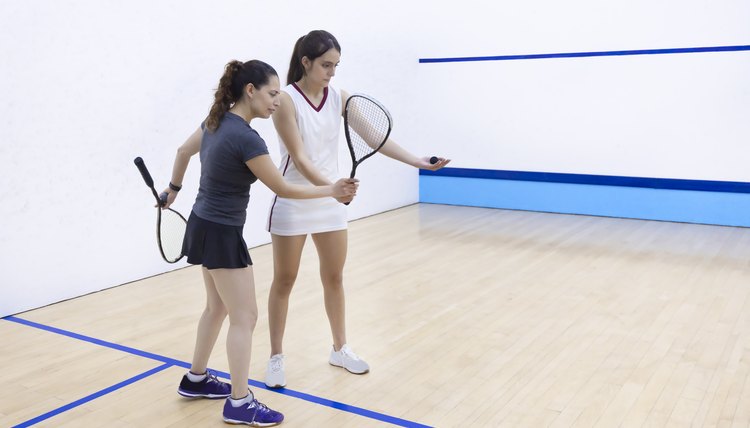
Servers start in the service zone which is between the short line and service line. If they cross the service line during their serve it is a foot fault. According to serve rule, consecutive fault serves, or defective serves, equal a side out for the serving player. The serve can be made once the ball bounces once in the service zone, if the ball passes the service box or is bounced a second time before hitting it is a side out and a loss of serve. The served ball must then hit the front wall first and land between the back wall and the front of the short line. A non front wall serve, a three wall serve, or out of court serve results in a side out. The ball can hit the side wall once before the first bounce.
What is the format of cutthroat racquetball?

Lisa F. Young/iStock/Getty Images
The player who is the server competes against the other two players. The first player to get to 15 points wins. Some games are two sets with a third game as a tiebreaker. As the game starts, the server stands in the server's box and the returners divide the backcourt behind the receiving line. One player stands on the right side and the other stands on the left side. The rules of this game are informal and don’t have official rules. On some racquetball courts, if the player on the right side of the court does the return of serve, the player on the left side must return the next shot after the server hits it. Other clubs allow the receiving players to play at the front and back of the court and either can return any ball. As long as your group agrees on the rules, any consistent approach can work for cutthroat.
How to rotate?
If the server hits a ball that cannot be returned to the front wall before it hits the floor, the server wins the point and serves again. If the returning team records a side out--no points are awarded to the defensive team in racquetball -- the player who started on the right side of the court becomes the server. The player who was on the left side moves to the right side and the server moves into the left return spot.
Strategy
Although the two players who are returning the ball would seem to have a numerical advantage over their opponent, the server can take advantage of the rules of the game by hitting away from the player who is due to return the next ball. The returner who hit the previous shot may be in a perfect position to hit the next shot but he has to give up his position and let his partner hit it. The server may have the ability to put his opponents on the run if he can regularly hit long serves that put the ball out of reach of the player who is due to hit the ball. Players can also try to hit balls that bounce near the sidewalls as that part of the court hinders players from hitting the ball.
References
Writer Bio
Steve Silverman is an award-winning writer, covering sports since 1980. Silverman authored The Minnesota Vikings: The Good, The Bad and The Ugly and Who's Better, Who's Best in Football -- The Top 60 Players of All-Time, among others, and placed in the Pro Football Writers of America awards three times. Silverman holds a Master of Science in journalism from the Medill School of Journalism.