

How to Paint Coleman Lanterns

Coleman has been a quintessential part of America's outdoor activities for decades. When you find a Coleman lantern in a thrift store or at a garage sale and think to yourself how useful it might be on your next camping or fishing trip, stop and take a look. Make sure that any rust is only on the surface and that the fuel tank has no holes or thin spots. If the metal seems solid, it is probably a good candidate for repainting,and you just saved yourself a few bucks and a trip to the sporting goods store.
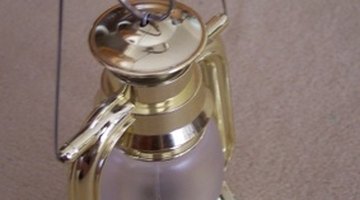
-
Remove the fuel lid and pour out any fuel remaining. Leave the cap off with the lantern tipped over a bucket to allow it to dry out for an hour. Twist the chimney and wick assembly counterclockwise to remove it from the body of the lantern. Twist the ring at the base of the fuel pressure pump counterclockwise and pull the pump free from the lantern.
-
Twist the nut on top of the chimney counterclockwise to release the lantern top for painting as well.
-
Apply a coat of naval jelly to any rusty spots on the lantern. Let it set for five minutes, then scrub the spot with steel wool to remove the rust. Rinse thoroughly with water. Sand the base of the lantern with emery cloth to ensure any loose paint and grime is removed to provide a good surface for painting.
-
Choose a spray enamel that is suggested for barbecue grills; this will ensure that it can handle the heat. Some off-brand paints will bubble and peel under heat. Set the body of the lantern on a plastic drop cloth tipped on its top.
-
Paint the bottom of the lantern first. Hold the can 8 to 10 inches from the surface and use short bursts, with brush-like strokes to paint the metal, overlapping strokes for adequate coverage. Avoid holding the spray still, which causes puddling, runs and drips in the finish. Allow the bottom to dry for one hour, before setting the lantern base upright.
-
Paint the top of the lantern base in the same way. Paint the lantern top using the same technique. Allow the paint to dry for six to eight hours before reassembling the lantern in the reverse of disassembly.
References
- Metal Web News: Rust Primer
- "Old Lamps and New: Restoring and Decorating"; Ruth Little; 1964
Writer Bio
Mark Morris started writing professionally in 1995. He has published a novel and stage plays with SEEDS studio. Morris specializes in many topics and has 15 years of professional carpentry experience. He is a voice, acting and film teacher. He also teaches stage craft and lectures on playwriting for Oklahoma Christian University.
Photo Credits
- yellow lantern image by timur1970 from Fotolia.com
More Articles

