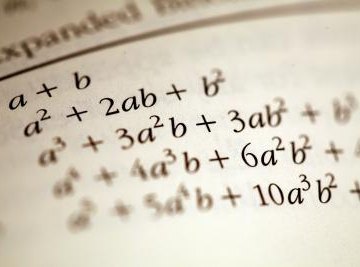

Polynomial long division is a method used to simplify polynomial rational functions by dividing a polynomial by another, same or lower degree, polynomial. It is useful when simplifying polynomial expressions by hand because it breaks down a complex problem into smaller problems. Sometimes a polynomial is divided by a linear factor in the general form ax + b. In this case, a shortcut method called synthetic division can be used to simplify the rational expression. This method is typically used to find the roots, or zeros, of a polynomial.
Polynomial Long Division: The Purpose
Long division with polynomials arises when you need to simplify a division problem involving two polynomials. The purpose of long division with polynomials is similar to long division with integers; to find whether the divisor is a factor of the dividend and, if not, the remainder after the divisor is factored into the dividend. The primary difference here is that you are now dividing with variables.
Polynomial Long Division: The Process
The divisor, in polynomial long division, is the denominator and the dividend is the numerator of a polynomial fraction. The division problem is set up exactly like an integer division problem with the divisor located outside of the bracket on the left and the dividend within the bracket. Divide the leading term of the dividend by the leading term of the divisor and place the result on top of the bracket. That result is then multiplied through the divisor, then subtract the result from the dividend, carrying down any terms uninvolved in the subtraction. The process is continued until you receive zero as an answer or can no longer factor the leading term of the divisor into the dividend.
Polynomial Synthethic Division: The Purpose
Polynomial synthetic division is a simplified form of polynomial division that is used only in the case of division by a linear factor, a monomial. It is most commonly used to find roots of a polynomial. It does away with division brackets and variables used in polynomial long division and focuses on the coefficients of the polynomial in question. This shortens the process of the division and can cause less confusion than typical polynomial long division.
Polynomial Synthetic Division: The Process
Instead of the typical division bracket as in long division, in synthetic division you use right-facing perpendicular lines, leaving room for multiple rows of division. Only the coefficients of the polynomial being divided are included inside the bracket, at the top. Testing a number suspected of being a zero involves placing that number outside of the bracket, next the the polynomial coefficients. The first coefficient is carried down below the division symbol, unchanged. The test zero is then multiplied by the carried-down value and the result is added to the next coefficient. The previous carried-down value is multiplied by the new result, then added to the next coefficient. Continuing this process through to the final coefficient reveals a result of either zero or a remainder. If there is a remainder, then the test zero is not an actual zero of the polynomial.
References
About the Author
Luc Braybury began writing professionally in 2010. He specializes in science and technology writing and has published on various websites. He received his Bachelor of Science in applied physics from Armstrong Atlantic State University in Savannah, Ga.
Photo Credits
Jupiterimages/Photos.com/Getty Images