

How to Apply Skip Troweled Stucco

Stucco is a finish masonry product used on interior and exterior walls. There are a variety of application procedures, including creating textures by spraying the final coat on the surface for a uniform sandy texture or with the use of trowels for a 3-D effect.
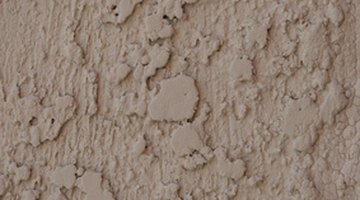
Skip troweling leaves the surface with a deeply textured pattern and is achieved with a trowel. Make sure the surface is clean and dry before applying stucco for the best adherence of the finish.
Things You Will Need
- Stucco mix (coarse sand blend)
- Bucket
- Water
- Small stainless steel trowel
- Stucco Tampico brush
- Large stainless steel trowel
-
Mix stucco according to package directions in a bucket. Use a small stainless steel trowel to mix the stucco thoroughly.
-
Apply a 1/8 inch layer of stucco mix to the surface with a large stainless steel trowel. Apply in smooth, even wide strokes while holding the trowel at a 10-degree angle. Allow to dry according to drying time printed on package.
-
Mix another batch of stucco according to package directions. However, mix to the consistency of pudding by adding water and mixing thoroughly with a small trowel.
-
Work in sections. Dip a stucco Tampico brush into the wet stucco mix. Splatter onto the wall in a random pattern by flicking the brush toward the wall.
-
Allow the stucco to dry on the wall for about 15 minutes. Smooth the tops of the stucco blobs with a large stainless steel trowel. Feather the stucco blobs with random strokes of the trowel to avoid creating a pattern.
-
Repeat for the next section of wall. Feather each section to the previously done sections.
Tip
Practice on an inconspicuous area or piece of 4-foot by 4-foot plywood to perfect a consistent technique before working in more obvious areas.
Warning
Follow manufacturer’s recommended drying times between coats to reduce risk of cracking.
The Drip Cap
- Stucco is a finish masonry product used on interior and exterior walls.
- Apply a 1/8 inch layer of stucco mix to the surface with a large stainless steel trowel.
- Apply in smooth, even wide strokes while holding the trowel at a 10-degree angle.
- Mix another batch of stucco according to package directions.
References
Writer Bio
Emily Patterson has been creating content for websites since 1996. She specializes in home improvement, natural body care and natural cleaning articles. Patterson holds a computing certificate from Penn State University.
Photo Credits
- stucco texture image by MAXFX from Fotolia.com
- stucco texture image by MAXFX from Fotolia.com
More Articles

